
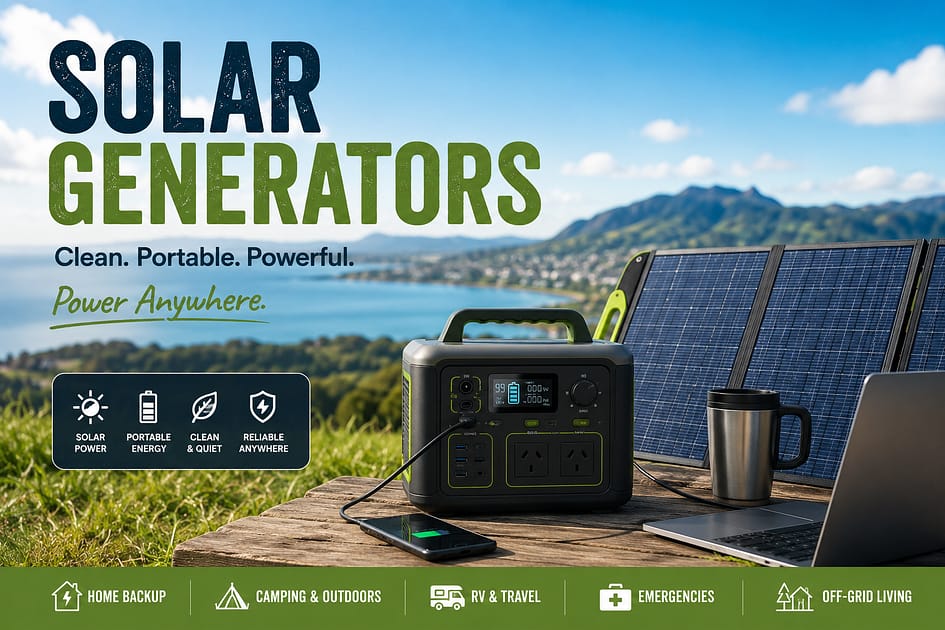
Power Wherever You Need It
Whether you’re preparing for unexpected power outages, planning your next camping adventure, living off-grid, or simply looking for a cleaner alternative to petrol generators, solar generators have become one of the most practical renewable energy solutions available.
Unlike traditional generators that rely on fuel, a solar generator stores electricity in a portable battery and can be recharged using solar panels, wall power, or even your vehicle. The result is quiet, emission-free power that’s easy to use and increasingly affordable.
In this guide, you’ll learn exactly what a solar generator is, how it works, what size you need and whether it’s the right investment for your home or lifestyle in New Zealand.
Eco TIGA Quick Take 🌿
Solar generators are ideal for New Zealanders who want clean, portable electricity without fuel, noise, or ongoing running costs. Whether you’re camping, preparing for emergencies, or reducing reliance on the grid, they offer flexible power that can be recharged almost anywhere.
What Is a Solar Generator?
A solar generator is an all-in-one portable power system that combines:
- A rechargeable lithium battery
- An inverter
- Battery management electronics
- Multiple charging options
- AC and DC outlets
When paired with portable solar panels, it creates a renewable power system capable of running appliances, charging devices, and providing backup electricity almost anywhere.
Despite the name, the generator doesn’t actually generate electricity itself. Instead, it stores energy collected from solar panels and delivers it whenever you need it.
How Does a Solar Generator Work?
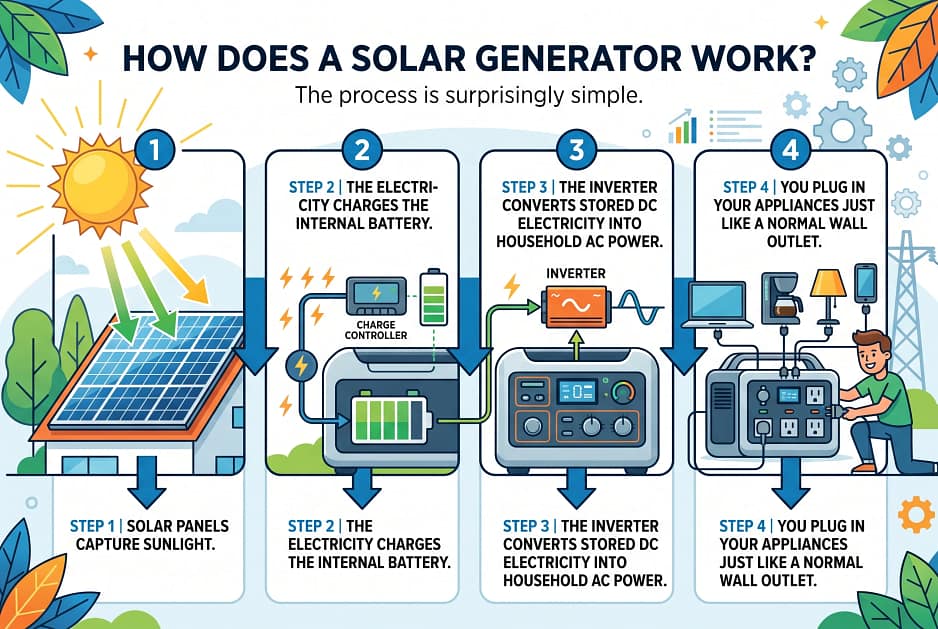
Most models can also be charged from:
- Household power
- Car charging socket
- USB-C (smaller models)
- Portable solar panels
What Can a Solar Generator Power?
The answer depends on the battery capacity and inverter size.
Perfect for:
- Phones
- Tablets
- Laptops
- Cameras
- LED lights
- Wi-Fi routers
Ideal for camping and travel.
Can comfortably run:
- Portable fridges
- CPAP machines
- TVs
- Small coffee machines
- Fans
- Drones
- Power tools
Great for caravans and emergency backup.
Suitable for:
- Refrigerators
- Freezers
- Microwaves
- Electric blankets
- Home office equipment
- Medical devices
- Multiple appliances simultaneously
Excellent for home backup and off-grid cabins.
Solar Generator vs Petrol Generator
| Solar Generator | Petrol Generator |
|---|---|
| Quiet operation | Noisy |
| No fuel required | Ongoing fuel costs |
| Zero emissions while operating | Produces exhaust fumes |
| Safe indoors | Outdoor use only |
| Low maintenance | Regular servicing |
| Renewable charging | Fuel dependent |
For many households, a solar generator is the more convenient option for backup power, especially where silence and indoor use are important.
Choosing the Right Solar Generator
Consider these key specifications.
Battery Capacity (Wh)
This determines how long your devices can run.
General guide:
- 300Wh: personal electronics
- 700Wh: camping
- 1000Wh: weekend trips
- 2000Wh+: home backup
Inverter Size (Watts)
This determines what appliances you can power.
Examples:
- 300W laptop charger ✓
- 800W microwave ✓
- 1800W kettle ✓
- 2400W heater ✗ (unless generator supports it)
Charging Speed
Many modern models now recharge in under two hours from mains electricity.
Look for:
- Fast AC charging
- MPPT solar charging
- Vehicle charging
- USB-C charging
Battery Chemistry
Lithium Iron Phosphate (LiFePO₄) batteries have become the preferred choice because they offer:
- Longer lifespan
- Better safety
- Thousands of charge cycles
- Improved heat resistance
Do You Need Solar Panels?
Not necessarily.
A solar generator works perfectly well without solar panels if you recharge it from mains electricity.
However, adding portable solar panels allows you to:
- Recharge while camping
- Stay powered off-grid
- Reduce electricity costs
- Maintain power during extended outages
For many people, purchasing a complete solar generator kit offers the greatest convenience.
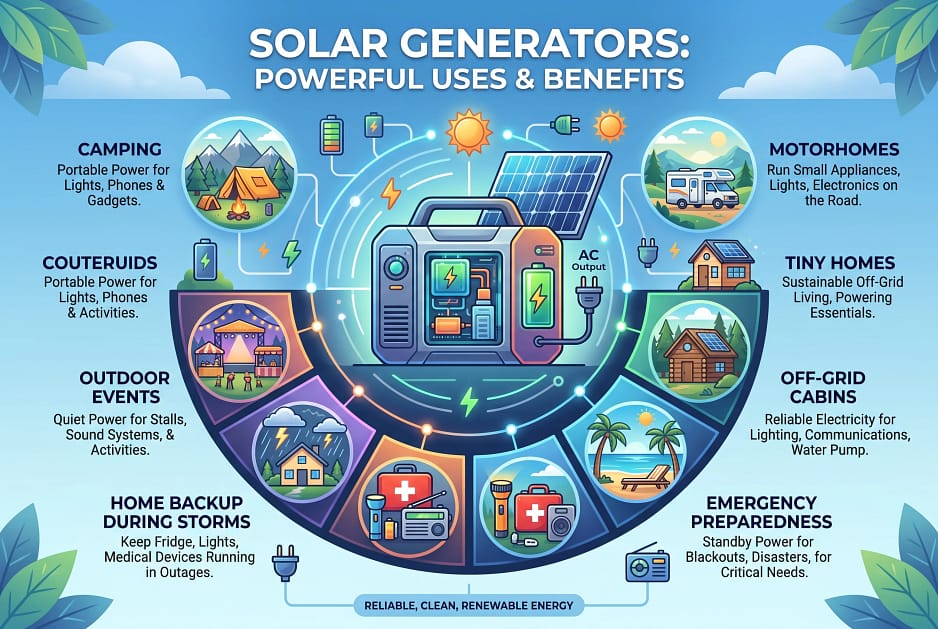
Best Uses in New Zealand
Solar generators are especially useful for:
Advantages
✔ Quiet operation✔ No petrol✔ Indoor safe✔ Renewable charging✔ Minimal maintenance
✔ Portable✔ Low running costs✔ Environmentally friendly
Potential Limitations
- Higher upfront purchase price
- Slower charging during cloudy weather
- Large appliances require larger models
- Solar charging depends on available sunlight
Tips Before Buying
Ask yourself:
- What do I actually want to power?
- How long do I need backup power?
- Will I use solar panels?
- Do I need portability?
- How often will I use it?
Buying slightly larger than your current needs often provides better long-term value.
Frequently Asked Questions
Are solar generators worth it in New Zealand?
For many households, yes. They provide clean backup power, are easy to maintain and can reduce reliance on the grid for camping, travel, and emergencies.
Can a solar generator run a refrigerator?
Yes. Many medium and large solar generators can power a modern refrigerator for several hours, depending on battery capacity and energy consumption.
Can I use a solar generator indoors?
Yes. Because they produce no exhaust fumes during operation, solar generators are generally safe to use indoors. Always follow the manufacturer’s ventilation and safety instructions.
Do solar generators work on cloudy days?
Yes, but solar panels will generate less electricity under cloudy conditions, so charging will take longer.
How long do solar generators last?
Quality models using LiFePO₄ batteries can often last for several thousand charge cycles, which may equate to many years of regular use.
Final Thoughts
Solar generators have evolved into practical, reliable energy solutions for modern homes and outdoor adventures alike. Whether you’re preparing for unexpected outages, heading into the wilderness, or simply looking for a quieter and cleaner alternative to fuel-powered generators, there’s likely a system to suit your needs.
The key is choosing a model with enough battery capacity and output for your intended use, while considering whether adding portable solar panels will help you get the most from your investment.
As battery technology continues to improve and prices become more competitive, solar generators are becoming an increasingly attractive option for New Zealand households seeking flexible, renewable power.