
The Complete Guide to Affordable Solar Power Without Owning Your Home

The Rise of Solar for Renters
For years, solar power felt like something reserved for homeowners.
If you didn’t own the roof above your head, going solar simply wasn’t an option.
That assumption is beginning to change.
Across New Zealand, electricity prices have steadily increased, portable solar technology has become more affordable, batteries have improved dramatically and many renters are asking the same question:
“Can I use solar power without owning the house?”
The answer is more encouraging than many people realise.
While renters generally can’t install permanent rooftop solar systems without the landlord’s permission, there are now several practical ways to use solar energy legally and safely. Portable solar panels, solar generators, balcony solar systems, camping-style setups and small off-grid systems are giving renters new opportunities to reduce electricity costs while lowering their environmental impact.
This shift is happening at the perfect time.
New Zealand enjoys excellent sunshine in many parts of the country. Cities like Nelson, Blenheim, Tauranga, Napier and Christchurch receive well over 2,000 hours of sunshine each year, while even cooler regions still generate worthwhile solar energy throughout much of the year.
At the same time, modern households rely on more rechargeable devices than ever before.
- Phones
- Laptops
- Tablets
- Power tools
- Camping equipment
- Portable fridges
- Electric bikes
- Emergency backup batteries
For renters, that’s a game changer.
Instead of viewing solar as an all-or-nothing investment costing ten of thousands of dollars, many people are discovering they can begin with a modest portable setup costing a few hundred dollars and expand over time as their needs grow.
Why Renters Are Looking at Solar Now
Several trends are pushing solar into the rental market.
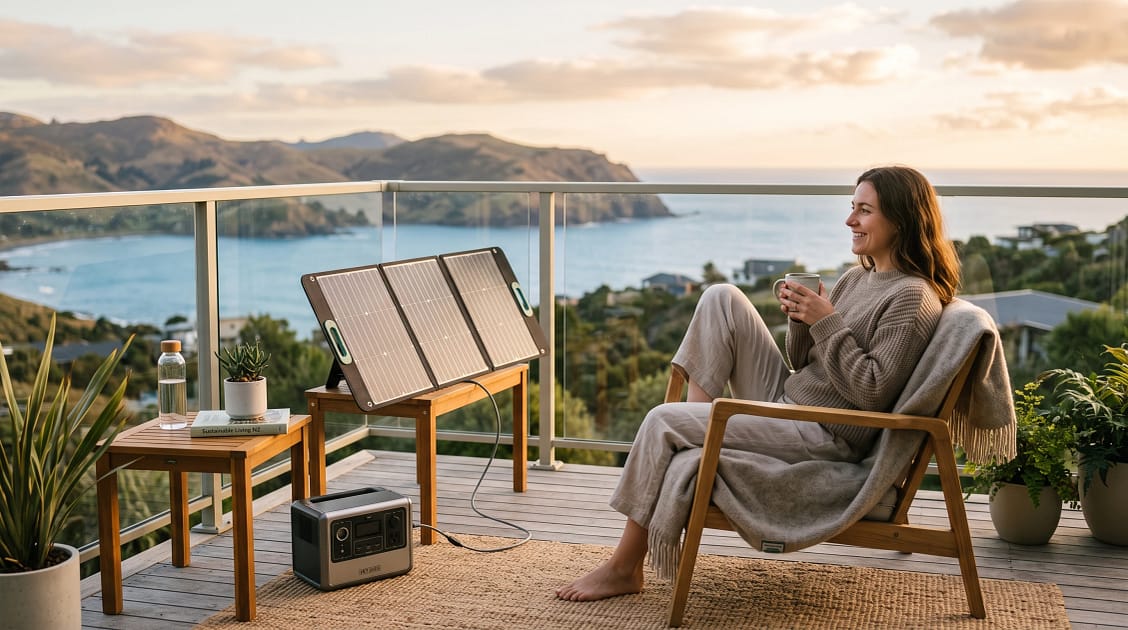
Rising electricity prices
Energy costs have become a significant part of household budgets.
While solar won’t eliminate every electricity bill, generating even part of your daily energy can noticeably reduce the amount purchased from the grid.
Better portable technology
Portable power stations have evolved rapidly over the past few years.
Modern lithium batteries are:
- lighter
- safer
- quieter
- faster charging
- capable of powering household appliances
Pair one with folding solar panels and you’ve created a transportable solar system that moves with you when you change homes.
Greater climate awareness
Many New Zealanders want to reduce their environmental footprint but don’t have the ability to install permanent renewable energy systems.
Portable solar allows renters to contribute toward cleaner energy without waiting until they own property.
Emergency preparedness
Storms, floods and power outages have highlighted the importance of backup electricity.
Portable solar generators provide renewable emergency power without needing petrol, diesel or noisy generators.
The Biggest Myth About Solar for Renters
One misconception discourages many renters before they even begin:
“You can’t use solar unless you install panels on your roof.”
That’s no longer true. Today’s portable solar systems can operate completely independently of your home’s wiring. Instead of feeding electricity into the house, they store energy inside portable batteries. You then use that stored electricity to power compatible devices directly from the battery. Think of it as carrying your own miniature power station wherever you live. When you move house…your power system moves too.
What This Guide Will Cover
Choosing solar as a renter can feel confusing because there’s plenty of conflicting advice online. Some articles assume you own your home. Others focus only on camping equipment. Few explain what actually works for New Zealand renters. That’s where this guide is different.
Over the following chapters, we explore:
- whether renters can legally use solar panels in New Zealand
- portable solar systems that require no permanent installation
- landlord permission and tenancy considerations
- balcony and apartment-friendly solar ideas
- solar generators and portable power stations
- expected costs and realistic savings
- common mistakes to avoid
- recommended products for different budgets
- frequently asked questions from New Zealand renters
Whether you’re renting a flat, townhouse, apartment, or lifestyle property, you’ll discover practical ways to begin using solar energy without making expensive permanent changes.
Is Solar Worth It for Renters?
The answer depends on your goals. If you’re hoping to eliminate your electricity bill entirely, portable solar alone probably won’t achieve that. However, if your aim is to:
- reduce electricity costs
- power everyday electronics
- have emergency backup power
- enjoy renewable energy while renting
- prepare for camping and travel
- invest in equipment that moves with you
then portable solar can be an excellent long-term investment.
Many people are surprised to discover that the same portable power station used during the week at home becomes the perfect companion for camping trips, road adventures and emergency power outages. Rather than buying something that stays attached to one property, you’re investing in equipment that remains useful wherever life takes you.
A New Way to Think About Solar
Perhaps the biggest change isn’t the technology. It’s the mindset. Solar no longer needs to be viewed as a massive home renovation. Instead, it can become something:
- Flexible
- Portable
- Expandable
- Moveable
Exactly the qualities renters have always needed. In the next chapter, we’ll answer one of the most common questions New Zealand renters ask:
Can I legally use solar panels if I rent my home?
We’ll explore tenancy rules, landlord permissions, safety considerations and what you can install without making permanent changes.
Can Renters Legally Use Solar Power in New Zealand?
Before anyone plugs in a solar panel and starts imagining lower power bills, there’s an important question to answer first:
Is it actually allowed?
The short answer is yes – renters in New Zealand can use solar power.
But the longer answer is where things get interesting.
Because while solar itself is legal, how you use it depends on what type of system you’re talking about and whether you’re making permanent changes to the property.
Let’s break it down clearly so you know exactly where you stand.
The Key Rule: You Can’t Modify the Property Without Permission
Under most New Zealand tenancy agreements, renters cannot make permanent alterations to a property without landlord approval.
That includes things like:
- drilling into walls or roofs
- installing fixed wiring systems
- mounting permanent solar panels on the roof
- modifying the electrical switchboard
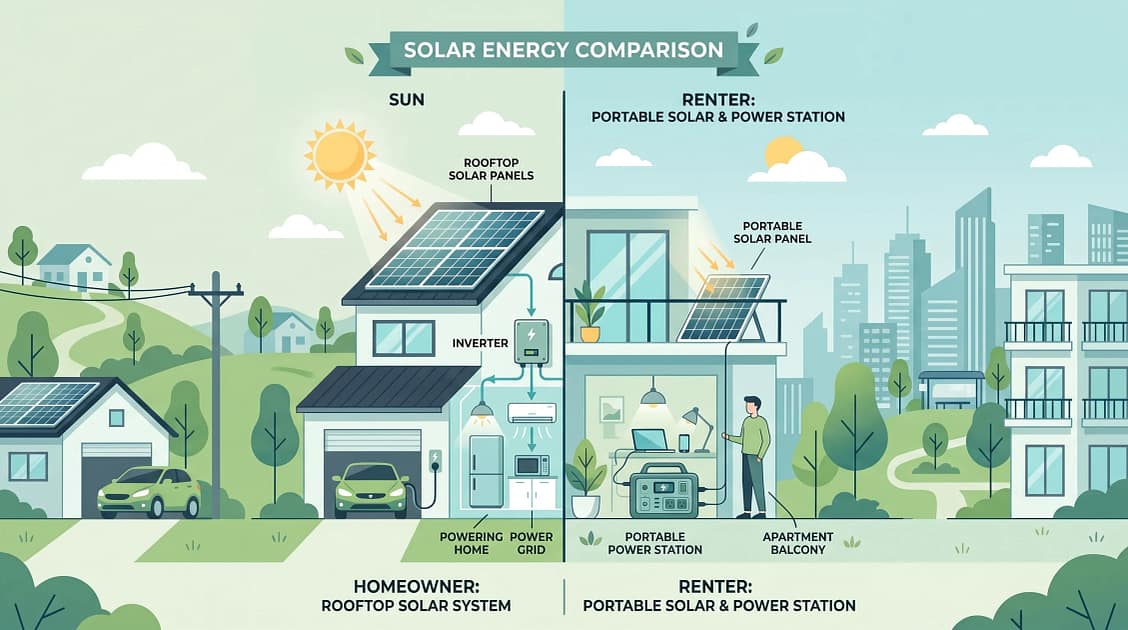
This is where traditional rooftop solar systems sit.
A standard rooftop system is considered a permanent installation, which means:
- it becomes part of the property
- it must meet building and electrical consent rules
- it requires landlord permission if you’re renting
So if your idea of solar is “panels on the roof feeding into the house,” that option usually sits on the homeowner side of the fence.
But that’s not the whole story.
Not even close.
The Legal Grey Area That Works in Your Favour
Here’s where renters get their advantage.
New Zealand tenancy rules don’t restrict you from owning or using portable energy devices.
That means you can legally use:
- portable solar panels
- solar generators (portable power stations)
- battery storage units
- plug-in solar kits that don’t modify wiring
- off-grid charging setups
As long as you’re not altering the building itself, you’re generally within your rights.
Think of it like this:
If it plugs in or charges something externally, it’s usually fine.
If it becomes part of the house wiring, it needs permission.
Portable Solar: The Renter-Friendly Sweet Spot
Portable solar systems are the biggest opportunity for renters.
These setups typically include:
- folding solar panels
- a rechargeable battery unit (power station)
- USB, AC, or DC output ports
You simply:
- Place the panel outside in the sun
- Plug it into the battery
- Use stored energy when needed
No drilling.
No wiring changes.
No permanent installation.
You’re essentially creating a moveable micro power station that follows you from flat to flat.
This is the version of solar that fits rental life perfectly.
What About Apartments and Units?
Apartment living introduces a few extra considerations.
Even if something is legal, building rules or body corporates may have their own restrictions.
Common limitations include:
- balcony safety rules
- restrictions on visible external equipment
- rules around shared spaces
- fire safety requirements
However, many renters still successfully use:
- balcony-mounted portable panels (non-permanent)
- indoor battery charging systems
- window-facing solar setups
- shared outdoor charging when allowed
The key is always the same principle:
No permanent changes to the building.
If you respect that, you stay in the safe zone.
Landlord Permission: When You Might Need It
You generally only need landlord approval if you’re:
- attaching anything to walls, roofs, or fences
- running cables through building structures
- altering electrical systems
- installing fixed solar infrastructure
Some landlords may still be open to ideas like:
- temporary mounting brackets
- non-invasive balcony systems
- shared-cost solar improvements
But that becomes a negotiation rather than a requirement.
A growing number of tenants in New Zealand are finding that landlords are more receptive to eco-friendly upgrades than they were a decade ago, especially when:
- there’s no damage risk
- no structural change
- no ongoing liability
Still, assume “portable only” unless told otherwise.
Safety and Insurance Considerations
Even when something is allowed, it still needs to be safe.
Portable solar systems are generally very safe when used correctly, but renters should keep a few basics in mind:
- avoid overloading batteries or devices
- use certified equipment where possible
- keep systems dry and ventilated
- don’t run cables through unsafe pinch points
- follow manufacturer guidelines
If you’re unsure, check your contents insurance as well.
Most portable solar systems fall under personal belongings, not property alterations, but it’s worth confirming.
The Big Picture: Freedom Without Ownership
This is the shift that matters most.
Renting used to mean:
- no solar access
- no energy independence options
- no control over rising electricity costs
But portable solar has changed that equation.
You don’t need permission to:
- generate your own small-scale renewable energy
- reduce reliance on the grid
- build backup power systems
- experiment with sustainable living
You just need the right type of system.
A Simple Way to Think About It
Here’s a helpful mental model:
- Rooftop solar = property upgrade
- Portable solar = personal equipment
One belongs to the house.
The other belongs to you.
That distinction is what unlocks everything for renters.
What Comes Next
Now that we’ve cleared up what’s legally possible, the next step is where things get practical.
Next we explore:
The best portable solar setups for renters in New Zealand
We’ll look at real-world configurations, what actually powers what and how to choose a system that fits your lifestyle without overspending or overcomplicating things.
The Best Portable Solar Setups for Renters in New Zealand
Now that you know renters can legally use solar, the next question naturally appears:
What does a real setup actually look like in everyday life?
The good news is you don’t need a complicated engineering project or a rooftop system to get started. Portable solar setups come in simple, scalable configurations that you can match to your lifestyle, budget, and space.
Think of it less like installing a system… and more like building your own personal energy toolkit.
Below are the three most practical setups for renters in New Zealand.
1. The Beginner “Essentials Kit”
Best for: light users, first-time solar users, small flats or shared accommodation
This is the simplest entry point into solar living.
- 1 × small folding solar panel (60W–100W)
- 1 × portable power bank or mini battery station
- USB charging ports
- phones
- tablets
- LED lights
- small fans
- rechargeable torches
- routers (for short periods)
You place the solar panel outside during the day, charge the battery, and use that stored energy later indoors.
No installation. No permissions. No complications.
It’s:
- affordable
- compact
- easy to store
- fully portable when you move
This setup won’t replace your electricity bill, but it will reduce small daily energy use and give you a taste of energy independence.
2. The “Everyday Power Saver” Kit
Best for: solo renters, couples, hybrid home/remote workers
This is the most popular sweet spot for renters who want real impact.
- 1–2 × foldable solar panels (100W–200W each)
- mid-size portable power station (300Wh–700Wh range)
- AC, USB, and DC output ports
- laptops
- Wi-Fi routers (long-term use)
- TV (short to medium use)
- kitchen appliances like blenders (occasionally)
- electric bike charging (slow charge)
- lighting for multiple rooms
Solar panels charge the power station during the day. You then use the stored energy at night or during peak electricity times.
Why it works:
This setup starts to meaningfully shift your electricity usage.
You’re not just charging phones anymore – you’re actively reducing grid reliance during everyday use.
It’s also ideal for:
- working from home
- power outage backup
- camping weekends
- moving between flats
One system, multiple lifestyles.
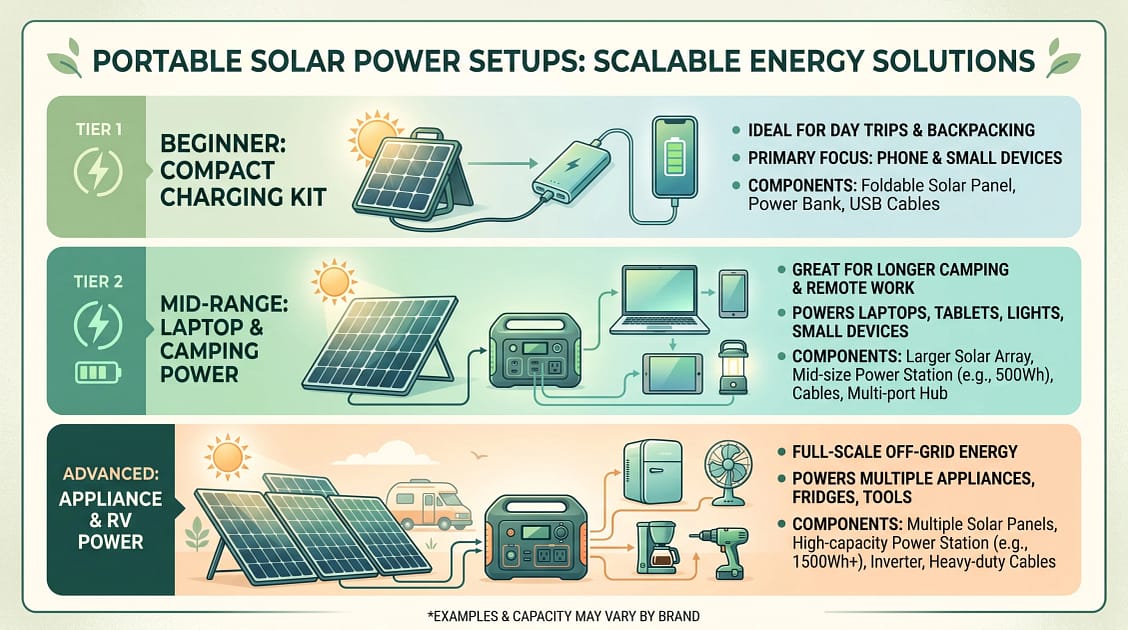
3. The “Full Renter Energy Kit”
Best for: long-term renters, eco-focused households, high electricity users
This is the most advanced portable setup that still stays within renter-friendly boundaries.
- 2–4 × high-efficiency folding solar panels (200W–400W each)
- large portable power station (1000Wh–2000Wh+)
- expansion battery (optional)
- multiple output options (AC, DC, USB-C fast charge)
- fridge (short-term or cycling use)
- desktop computer setups
- multiple devices at once
- cooking appliances (limited use)
- extended off-grid backup during outages
This setup behaves like a mini household energy system. Solar panels continuously recharge the battery, which then powers multiple devices throughout the day.
Why it works for renters:
It delivers real energy independence without property modification.
You still don’t touch the building, but you significantly reduce dependence on it.
This is also the setup that overlaps heavily with:
- emergency preparedness
- storm resilience
- off-grid camping setups
- sustainable lifestyle transitions
Choosing the Right Setup (Simple Guide)
If you’re unsure where you fit, use this quick guide:
- Just curious / beginner → Essentials Kit
- Want noticeable savings + flexibility → Everyday Power Saver
- Serious about reducing grid use → Full Renter Energy Kit
You don’t need to start big.
In fact, most renters begin small and scale up as they realise what they actually use power for day to day.
A Key Insight Most People Miss
Portable solar isn’t about replacing your entire electricity system overnight.
It’s about strategic displacement.
Instead of powering everything from the grid, you gradually shift specific energy use into your portable system:
- daytime charging → solar
- low-energy devices → solar
- backup needs → solar
- travel and camping → solar
Over time, this adds up in both cost savings and energy awareness.
What This Looks Like in Real Life
Imagine this:
- Your phone charges from solar power during the day.
- Your laptop runs off stored solar energy while you work.
- Your lights and Wi-Fi are powered during peak evening hours.
- Your portable battery comes with you on weekend trips.
Nothing is permanently installed. Nothing requires permission.
But your relationship with electricity quietly changes.
You stop thinking only about “using power from the grid”
and start thinking about “where my energy is coming from today.”
What’s Next
Now that we’ve explored what systems look like, the next step is understanding what they actually cost and whether they are worth it in real-world New Zealand conditions.
Next we break down:
Costs, savings and whether portable solar is financially worth it for renters
We’ll get very practical – numbers, expectations and honest trade-offs included.
Costs, Savings and Whether Portable Solar Is Worth It in New Zealand
Up to this point, portable solar might feel like a clever idea.
But the real question most renters eventually ask is much more grounded:
“Is this actually worth the money?”
The answer depends on how you define value.
Portable solar for renters isn’t just a purchase. It’s a mix of:
- energy savings
- convenience
- backup security
- lifestyle flexibility
- long-term portability
So instead of asking “Does it pay itself off quickly?”, it’s more accurate to ask:
“What do I get for the money, and how do I use it?”
Let’s break it down realistically.
Typical Portable Solar Costs in New Zealand
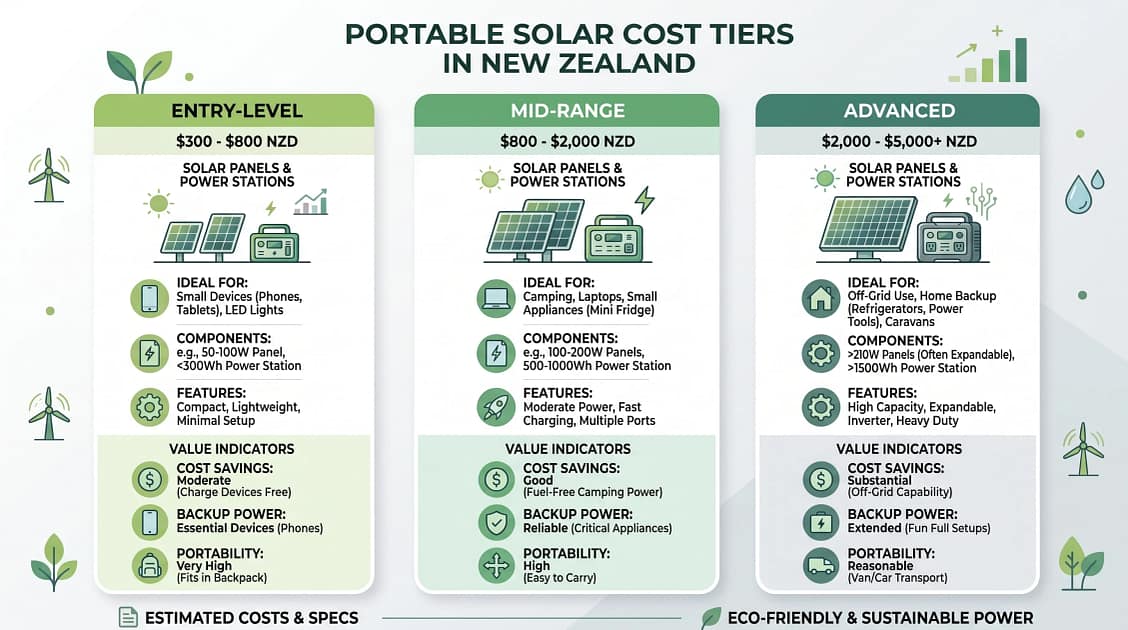
Prices vary depending on brand, capacity, and quality, but here’s a realistic range for renters:
Entry-level setup
- Small solar panel (60W–100W): $120–$300
- Mini power bank: $100–$300
Total: $200–$600
This covers basic device charging and light use.
Mid-range renter setup
- Solar panels (100W–200W): $200–$600 each
- Portable power station (300Wh–700Wh): $400–$1,200
Total: $800–$1,800
This is the most common setup for renters wanting noticeable impact.
Advanced renter setup
- High-capacity solar panels: $400–$1,200 each
- Large power station (1000Wh–2000Wh+): $1,200–$3,000+
Total: $2,000–$4,500+
This is closer to a full portable energy system for serious users or long-term renters.
What You Actually Save (Realistic View)
This is where expectations matter.
Portable solar does not eliminate your power bill.
Instead, it reduces specific parts of your energy use.
For most New Zealand renters, savings come from:
- charging devices via solar instead of grid power
- reducing peak-time electricity use
- offsetting small appliance consumption
- avoiding generator fuel costs during outages or camping
Realistic monthly impact:
- Light users: $5–$15 saved
- Moderate users: $15–$40 saved
- Heavy portable users: $40–$80+ saved (depending on usage habits)
So… Does It Pay for Itself?
If you are looking purely at electricity bill payback:
👉 Portable solar is a long-term return system, not a quick ROI system.
But that’s only part of the story.
Because the value expands when you include:
1. Emergency power security
When outages happen, your system still works.
No fuel. No noise. No waiting.
2. Mobility
You take it with you when you move house.
Unlike rooftop solar, nothing is “left behind.”
3. Lifestyle flexibility
It supports:
- camping
- remote work
- travel
- outdoor living
4. Energy awareness
People often reduce their overall consumption simply by seeing how much power they use.
This behavioural shift is one of the biggest hidden benefits.
The Hidden Value Most Renters Miss
The biggest return from portable solar is not financial.
It’s psychological.
Once you start generating your own energy, even in small amounts, your relationship with electricity changes.
You begin to notice:
- what uses power
- when you use it
- how much you actually need
Many renters end up becoming more energy-efficient without trying, simply because visibility changes behaviour.
A Simple Way to Decide If It’s Worth It
Instead of guessing, use this 3-question check:
1. Do I want lower electricity use or just backup power?
- If yes → entry or mid-range setup makes sense
2. Do I move house or expect to move in the next few years?
- If yes → portability becomes a major advantage
3. Do I use portable devices regularly (laptop, phone, camping gear)?
- If yes → solar becomes far more practical
If you answer “yes” to at least two, portable solar is usually a good fit.
Where the Eco TIGA Solar Calculator Fits In
Instead of estimating everything manually, you can plug your real usage into the Eco TIGA Solar Calculator to see:
- what size setup matches your lifestyle
- how much energy you realistically use
- what kind of solar system fits your budget range
It turns abstract numbers into something personal and actionable.
Think of this section as the theory.
The calculator is where it becomes yours.
One Important Reality Check
Portable solar is powerful, but it has limits:
- It won’t fully replace household grid electricity for most renters
- It depends on sunlight availability
- It works best when paired with energy-conscious habits
The goal is not total independence.
The goal is meaningful reduction and flexibility without needing ownership.
What’s Next
Now that we’ve covered cost and value, the next step is where most people either get stuck or succeed:
Choosing the right system for your exact situation without overpaying or underbuying.
Next, we break down:
How to choose the right portable solar setup (without confusion or expensive mistakes)
This is where everything becomes practical, personal, and decision-ready.
How to Choose the Right Portable Solar Setup (Without Overpaying or Overthinking)
At this point, you know portable solar is possible, legal, and potentially useful for renters in New Zealand.
You also know it comes in different sizes, price ranges and power levels.
Now comes the part that trips most people up:
Choosing the right setup.
Because the mistake isn’t usually “not buying solar.”
It’s buying the wrong version of it.
Too small and it feels pointless.
Too big and it feels like wasted money sitting in a cupboard.
So let’s make this simple.
Step 1: Start With Your Real Energy Habits
Forget solar for a moment and think about your daily routine.
Ask yourself:
- What devices do I actually use every day?
- Do I work from home or outside the home?
- Do I travel or go camping often?
- Do I care more about savings or backup power?
This matters more than specs.
Solar setups only make sense when they match how you already live.
Step 2: Match Yourself to One of These 3 User Types
Instead of comparing technical specs, choose your “energy personality”.
Type 1: The Light User
You mostly use:
- phone
- laptop occasionally
- basic household lighting
- small devices
Best setup: Entry Kit
You don’t need high capacity. You need convenience.
Look for:
- 60W–100W solar panel
- small power bank or mini station
👉 Goal: reduce small daily charging costs
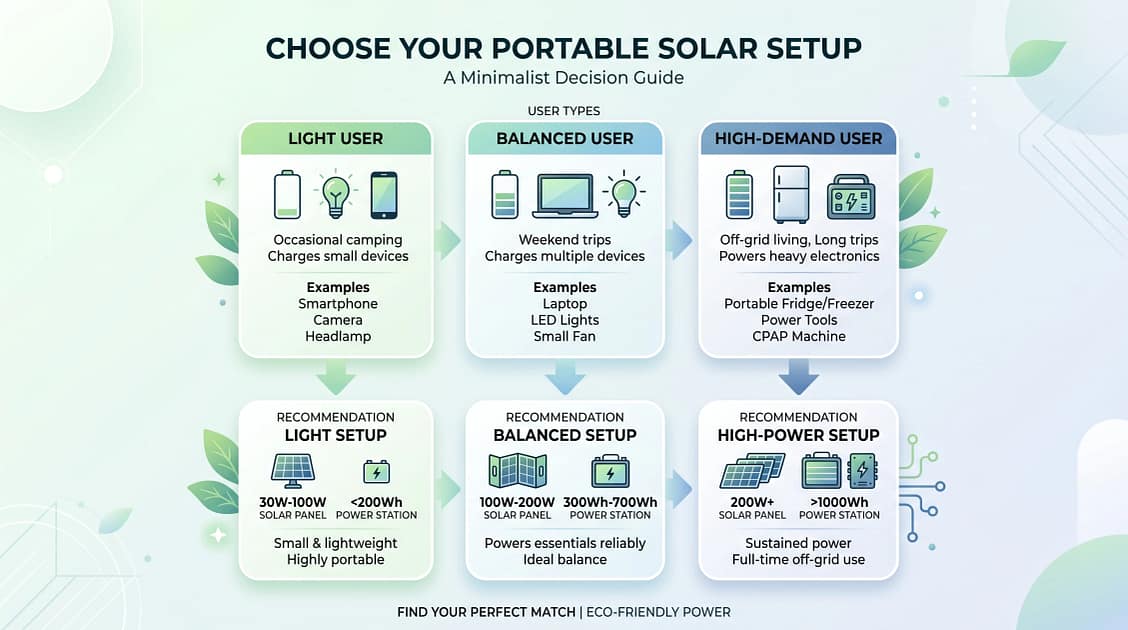
Type 2: The Balanced User
You:
- work from home sometimes
- use multiple devices daily
- want backup power
- care about saving on electricity bills
Best setup: Mid-Range Kit
Look for:
- 100W–400W solar panels
- 300Wh–700Wh power station
👉 Goal: offset real daily electricity usage
This is the “sweet spot” for most renters.
Type 3: The High-Demand User
You:
- use multiple devices all day
- want serious backup power
- go camping or travel often
- want near off-grid flexibility
Best setup: Advanced Kit
Look for:
- 400W+ solar input capability
- 1000Wh–2000Wh+ power station
- expandable battery options
👉 Goal: meaningful grid reduction + independence during outages
Step 3: Don’t Overbuy Just in Case
One of the most common mistakes is jumping straight to a large system because it sounds impressive.
But oversized setups often lead to:
- unused capacity
- higher upfront cost
- unnecessary weight and bulk
- lower return on investment
A better mindset:
Start with what you will use weekly, not what you imagine you might use someday.
You can always scale up later.
Portable solar is modular by nature.
Step 4: Think in Energy Roles, Not Devices
Instead of asking:
“What can this power?”
Ask:
“What job do I want this system to do?”
Most renter setups fall into three roles:
1. Device Charging Role
Phones, laptops, small electronics
2. Comfort Role
Fans, lighting, Wi-Fi, entertainment devices
3. Backup Role
Emergency outages, storms, essential appliances
Your role determines your setup more than any spec sheet.
Step 5: The Smart Buying Sequence
If you’re unsure, follow this progression:
1. Start with a mid-size solar panel
2. Add a portable power station
3. Test real usage for a few weeks
4. Expand only if you feel limited
This prevents overspending and builds real-world understanding.
Step 6: Where the Eco TIGA Solar Calculator Fits In
If you’re still unsure after reading this chapter, this is where the Eco TIGA Solar Calculator becomes useful.
It helps you:
- estimate your real energy usage
- match usage to system size
- avoid buying too small or too large
- see what setup fits your lifestyle profile
Think of it as the “reality check” step between reading and buying.
A Simple Truth Most Guides Don’t Say
You don’t need the perfect solar setup.
You need a usable one.
Something that:
- fits your space
- matches your habits
- reduces your reliance on the grid in a meaningful way
- still feels easy to use every day
The best system is the one you actually use.
Not the one with the biggest numbers.
What Comes Next
Now that you know how to choose the right setup, the final chapter brings everything together.
We cover:
Common mistakes renters make with solar (and how to avoid them)
This is where we make sure your investment actually works in real life, not just on paper.
Common Mistakes Renters Make with Solar (and How to Avoid Them)
By now, you’ve seen what portable solar can do, how it works and how to choose a setup that fits your lifestyle.
But there’s one more layer that makes a big difference between a system that feels useful… and one that gathers dust in a corner.
Avoiding the common mistakes.
Because most frustration with portable solar doesn’t come from the technology itself.
It comes from expectations, setup choices and how it’s used day to day.
Let’s make sure you skip those pitfalls.
Mistake 1: Expecting Rooftop Solar Results
This is the most common misunderstanding.
Portable solar is not designed to fully replicate a rooftop system.
If you expect:
- full household energy replacement
- zero electricity bills
- constant high-output power
you’ll likely be disappointed.
The reality:
Portable solar is about targeted energy use, not total replacement.
Think:
- devices
- backup power
- partial bill reduction
Not:
- whole-home independence
Mistake 2: Buying Based on Specs Instead of Lifestyle
It’s easy to get caught up in:
- wattage numbers
- battery capacity
- technical charts
But specs don’t tell you whether a system fits your life.
Better approach:
Start with your habits:
- what you use daily
- when you use power
- where you live
- how often you move
Then match the system to that reality.
Mistake 3: Going Too Big Too Soon
Many first-time buyers overspend on large systems thinking:
“I’d rather have too much than too little.”
But oversized systems often lead to:
- underused capacity
- unnecessary cost
- heavier equipment
- lower day-to-day usability
Better approach:
Start smaller, then expand if needed.
Portable solar is designed to grow with you.
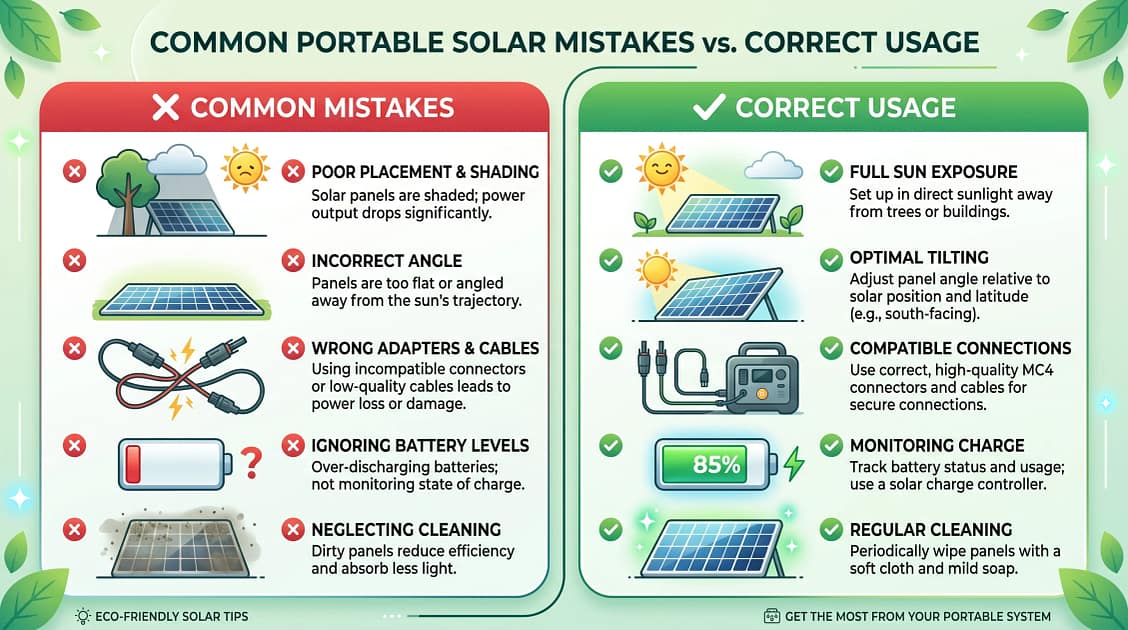
Mistake 4: Poor Sun Placement
Even the best system underperforms if the solar panels aren’t positioned well.
Common issues include:
- partial shade
- angled windows blocking sunlight
- indoor-only charging attempts
- poor seasonal positioning
Simple fix:
Always prioritise:
- direct sunlight
- outdoor placement when possible
- repositioning throughout the day
Solar is simple, but it still needs the sun to show up.
Mistake 5: Not Understanding What “Success” Looks Like
If you measure success by:
- eliminating your full power bill
- powering everything all the time
you’ll miss the real benefits.
Better success markers:
- lower daily grid usage
- reliable backup power
- reduced charging costs
- energy independence for key devices
- improved awareness of energy use
Small shifts add up.
Mistake 6: Forgetting It’s a Portable System
This sounds obvious, but it changes everything.
Portable solar systems are:
- moveable
- flexible
- adaptable
But many people treat them like fixed installations.
Better approach:
Use them across different scenarios:
- home use
- travel
- camping
- emergencies
- work setups
The more you move it with your life, the more value you get from it.
Bringing It All Together
If you’ve followed this guide, you now understand:
- what renters can legally do
- what portable solar actually is
- how systems are structured
- what they cost and save
- how to choose the right setup
- what mistakes to avoid
Now the final step is turning that knowledge into action.
🌿Take the Next Step with Eco TIGA
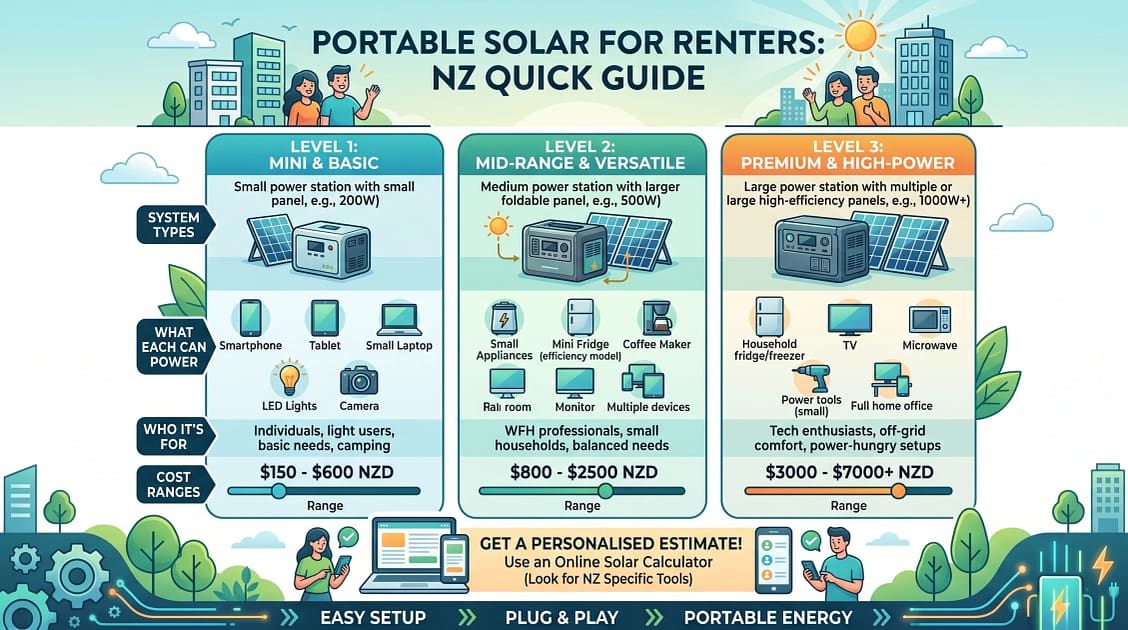
If you’re still unsure what setup is right for you, the best place to start is here:
Try the Eco TIGA Solar Calculator
See what size portable solar setup matches your lifestyle and energy use
It helps you turn general ideas into a personalised setup recommendation in just a few clicks.
Related Articles
If you found this helpful, you might also like:
- Best Portable Power Stations for Renters
- Eco TIGA Tool Hub
- Bluetti vs EcoFlow vs Jackery NZ: Best Power Station
One Last Thought
Portable solar isn’t about perfection.
It’s about flexibility.
It gives renters something they rarely get in energy conversations:
Choice.
Choice over how you power your devices.
Choice over how you prepare for outages.
Choice over how you reduce your footprint.
And choice, even in small amounts, changes how you live in a space.