
Introduction
If you’ve been wondering whether solar panels are worth the investment, you’re not alone.
Across New Zealand, more homeowners are looking for ways to reduce rising electricity costs, improve energy independence and make their homes more sustainable. Advances in solar technology, improved battery storage and greater awareness of renewable energy have made solar more accessible than ever.
At the same time, solar isn’t a one-size-fits-all solution.
The amount you can save depends on several factors, including how much electricity your household uses, the direction your roof faces, how much shade it receives and whether you own or rent your home.
That’s why we’ve created the Should I Go Solar? Calculator.
Instead of guessing, our calculator provides a personalised Solar Suitability Score based on your circumstances. In less than a minute, you’ll receive an estimate of how well solar may suit your home, along with practical recommendations to help you decide on your next steps.
Whether you’re exploring rooftop solar panels, portable solar systems, or simply trying to understand your options, this guide will help you make a more informed decision.
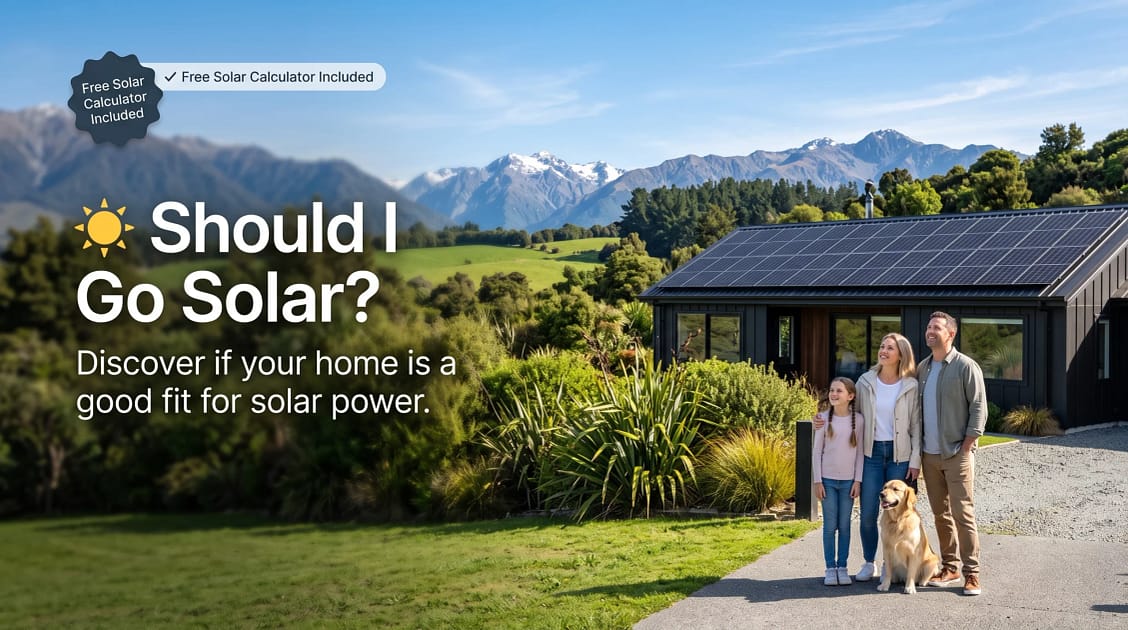
Should I Go Solar?
Thinking about installing solar panels but unsure whether they’re worth the investment?
Our free Should I Go Solar? Calculator estimates your home’s solar potential based on your electricity usage, roof direction, sunlight and energy goals.
Free to use. No sign-up required. Receive your personalised Solar Suitability Score in under a minute.
Quick Answer
Is Solar Worth It?
For many New Zealand households, the answer is yes, but the reasons vary.
Solar tends to deliver the greatest value when you:
- Have moderate to high electricity usage.
- Own your home.
- Have a roof with good sun exposure.
- Plan to stay in your property for several years.
- Want greater protection against future electricity price increases.
- Are considering battery storage or backup power.
Even if your home isn’t an ideal candidate for rooftop solar, there may still be practical alternatives such as portable power stations, solar generators or plug-and-play solar systems, particularly if you’re renting.
💡 The easiest way to find out is to use our free Solar Calculator and compare your home’s suitability before requesting quotes.
Why More New Zealanders Are Choosing Solar
Solar energy has become one of the fastest-growing renewable energy solutions for homes and it’s easy to see why.
Modern solar panels are more efficient than earlier generations, battery technology continues to improve and many households are looking for ways to reduce long-term energy costs while shrinking their environmental footprint.
For some homeowners, the appeal is financial.
Generating your own electricity can help reduce reliance on the grid, especially during daylight hours when solar production is at its highest. Depending on your system size and electricity usage, those savings can add up over time.
For others, resilience is just as important.
Storms, extreme weather events and occasional power outages have highlighted the value of having backup energy available. Pairing solar panels with a battery system or portable power station can help keep essential appliances running when the grid goes down.
Environmental benefits are another major motivator. Every kilowatt-hour of solar electricity generated at home reduces reliance on fossil fuel-based energy generation, helping lower household carbon emissions.
While every property is different, solar offers many households the opportunity to take greater control over their energy future.
🌿 Eco Tip
Reducing electricity consumption before installing solar can make your investment even more effective.
Simple changes such as switching to LED lighting, improving insulation, choosing energy-efficient appliances and reducing standby power use can lower your energy demand. A more efficient home often requires a smaller solar system to meet the same needs, potentially reducing installation costs while maximizing long-term savings.
What Determines Whether Solar Is Right for Your Home?
One of the biggest misconceptions about solar is that it either works for everyone or doesn’t work at all.
In reality, several factors work together to determine how much value you’ll get from a solar system.
Our Should I Go Solar? Calculator considers many of these key factors to give you a personalised estimate.
1. Your Electricity Usage
The more electricity your household consumes, the greater the potential benefit from generating your own power.
Homes with higher daytime electricity use often gain the most value because they can use more of the energy their panels produce rather than relying on the grid.
Typical examples include:
- Families with multiple occupants.
- People who work from home.
- Homes with electric hot water systems.
- Electric vehicle owners.
- Households using heat pumps or air conditioning regularly.
If your monthly electricity bill is relatively low, solar may still be worthwhile but the financial payback could take longer.
Curious whether your electricity usage makes solar worthwhile?
Wondering if your electricity bill is high enough to make solar worthwhile? Instead of estimating manually, use the Should I Go Solar? Calculator to receive your personalised Solar Suitability Score in under a minute.
Understanding Roof Direction and Sunlight
One of the biggest factors affecting solar performance is how much sunlight reaches your roof throughout the day.
Solar panels don’t need constant sunshine to generate electricity. They still produce power on cloudy days but the amount of energy they generate depends on the roof’s orientation, shading and the time of year.
In New Zealand, the ideal roof faces north, allowing panels to capture the greatest amount of sunlight over the course of the day. However, that doesn’t mean east or west-facing roofs aren’t worthwhile.
Modern solar systems are far more efficient than many people realise.
North-Facing Roofs
A north-facing roof generally offers the highest energy production throughout the year.
These roofs receive the longest periods of direct sunlight, making them ideal for homeowners looking to maximise electricity generation and shorten the payback period of their solar investment.
Best for:
- Maximum energy generation
- Highest long-term savings
- Homes with batteries
- Electric vehicle charging
East-Facing Roofs
East-facing roofs generate more electricity during the morning.
They’re often a good option for households where people are home early in the day or start using appliances before midday.
Although annual generation is slightly lower than a north-facing roof, east-facing installations can still provide excellent value.
West-Facing Roofs
West-facing roofs produce more electricity in the afternoon and early evening.
This can be particularly useful for families who are away during the day but use more electricity after work when they return home.
South-Facing Roofs
South-facing roofs generally receive the least direct sunlight in New Zealand.
That doesn’t automatically rule out solar.
Depending on your location, roof angle and surrounding environment, a south-facing installation may still produce worthwhile energy, especially with today’s more efficient solar panels.
Professional installers can assess whether the expected output justifies the investment.
The Impact of Shade
Shade is often a bigger issue than roof direction.
Large trees, neighbouring buildings, chimneys and even satellite dishes can reduce the amount of sunlight reaching your panels.
Partial shading doesn’t necessarily mean solar isn’t suitable, but it can reduce overall system performance.
If shading is unavoidable, installers may recommend panel optimisers or microinverters, which help minimise the effect of shaded panels on the rest of the system.
🌿 Eco Tip
Before assuming your roof isn’t suitable, consider whether simple changes, such as trimming overhanging branches could improve solar exposure.
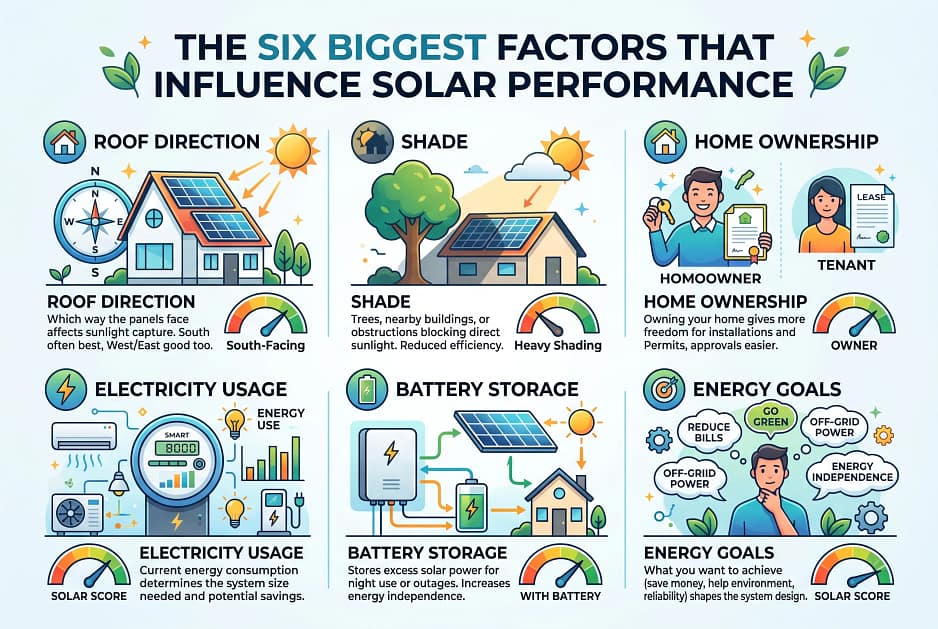
What Affects Your Solar Score?
How Much Money Can Solar Save?
One of the first questions homeowners ask is:
“How much money could I actually save?”
The honest answer is that every household is different.
Your savings depend on:
- How much electricity you use.
- When you use it.
- The size of your solar system.
- Your roof’s solar exposure.
- Whether you add battery storage.
- Future electricity prices.
However, households with suitable roofs and moderate to high electricity usage often see noticeable reductions in their power bills.
The more of your own solar electricity you use during the day, the greater your potential savings.
Example Savings
| Monthly Power Bill | Possible Annual Savings* |
|---|---|
| $100 | $180 to $500 |
| $150 | $270 to $800 |
| $250 | $450 to $1,300 |
| $350 | $630 to $1,900 |
Illustrative estimates only. Actual savings vary depending on system size, location, electricity usage, export rates and weather conditions.
Understanding Payback Periods
Rather than focusing only on installation cost, it’s helpful to think about the payback period.
This is the length of time it takes for the money you’ve saved on electricity to equal the cost of installing the solar system.
Many factors influence this, including:
- System size
- Installation cost
- Electricity prices
- Household energy use
- Available incentives
- Battery storage
Although payback periods vary, solar panels can continue producing electricity for decades after they’ve paid for themselves, providing ongoing value over the long term.
Quick Answer Box
Is Solar a Good Financial Investment?
For many homeowners, solar is more than just a way to save money.
It can also help:
✅ Reduce exposure to rising electricity prices
✅ Increase energy independence
✅ Lower household carbon emissions
✅ Add resilience during power outages when paired with battery storage
Curious how your electricity bill affects your savings?
Estimate how much you could save based on your home’s characteristics. Use the Should I Go Solar? Calculator to estimate your Solar Suitability Score and see your potential annual savings.
Are Solar Batteries Worth It?
Adding battery storage is one of the biggest decisions homeowners face when installing solar.
Without a battery, most homes use solar electricity during the day and draw power from the grid after sunset.
A battery stores excess electricity generated during daylight hours so you can use it later, reducing your reliance on the grid even further.
For some households, this can significantly increase the value of a solar system.
Benefits of Battery Storage
- Store excess solar energy for evening use.
- Provide backup power during outages (depending on the system).
- Increase self-consumption of solar electricity.
- Reduce reliance on electricity retailers.
- Improve energy resilience.
Potential Drawbacks
Battery systems also come with additional upfront costs.
Whether they make financial sense depends on factors such as:
- Your electricity usage.
- Time-of-use electricity pricing.
- How much excess solar energy you generate.
- Whether backup power is important to you.
For households that experience occasional outages or value energy security, batteries may provide benefits beyond simple financial savings.
🌿 Eco Tip
If a home battery isn’t within your budget yet, a portable power station can provide backup electricity for essential devices during outages and may be a practical steppingstone toward greater energy independence.
Solar for Renters and Apartment Dwellers
Owning a home isn’t the only path to using solar.
Although installing rooftop panels usually requires the property owner’s permission, renters still have several options for reducing their reliance on grid electricity.
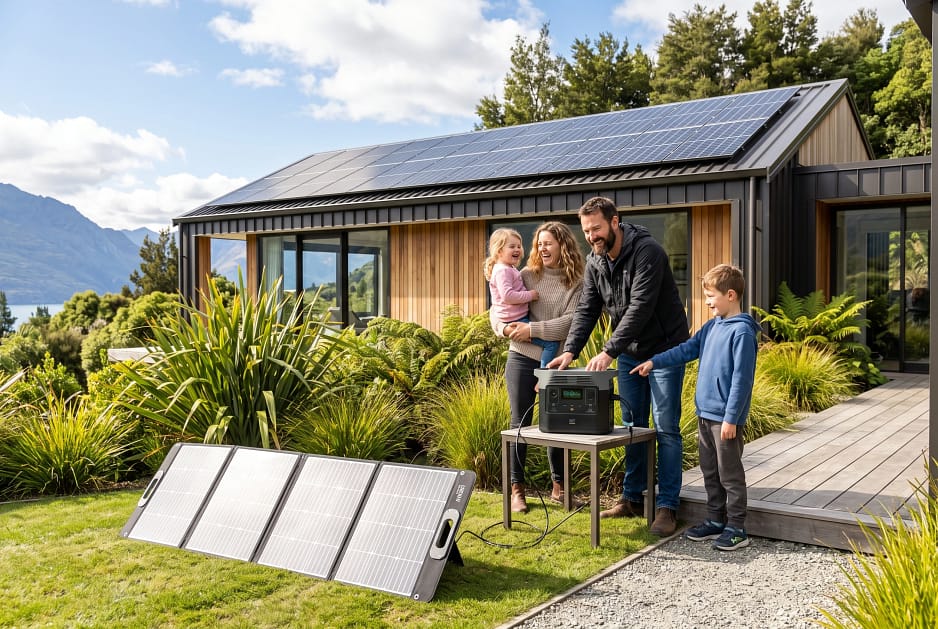
Portable solar panels, solar generators and portable power stations can all provide renewable energy without making permanent changes to the property.
These solutions are particularly useful for:
- Renters
- Tiny homes
- Caravans
- Motorhomes
- Camping
- Emergency backup
If you’re renting, it’s also worth speaking with your landlord. Some property owners are becoming more interested in solar as a way to increase the appeal and long-term value of their rental properties.
Related Resources
Explore more from Eco TIGA:
- Can Renters Use Solar in New Zealand?
- Portable Power Stations Guide
- Solar Generators Buying Guide
- Portable Power Calculator
Comparison Table
| Option | Best For | Permanent Installation? |
|---|---|---|
| Rooftop Solar Panels | Homeowners | Yes |
| Solar + Battery | Maximum independence | Yes |
| Solar Generator | Backup & camping | No |
| Portable Power Station | Renters & emergencies | No |
| Portable Solar Panels | Flexible charging | No |
Common Solar Myths Debunked
There’s a lot of conflicting information about solar power and some outdated myths still discourage homeowners from exploring it. Let’s separate fact from fiction.
Myth 1: “Solar panels don’t work on cloudy days.”
Reality:
Solar panels generate electricity from daylight, not just direct sunshine. While output is lower on overcast days, they continue producing power throughout the year. New Zealand’s climate is well suited to solar generation, even outside the sunniest regions.
Myth 2: “You need a battery for solar to be worthwhile.”
Reality:
A battery can increase your energy independence, but many homeowners enjoy significant savings with solar panels alone. Whether a battery is worthwhile depends on your household’s energy use, budget and goals.
Myth 3: “Solar only makes sense if you live in the far north.”
Reality:
Homes across New Zealand can benefit from solar. Roof orientation, shading and electricity usage often have a greater impact than location alone.
Myth 4: “Solar panels require constant maintenance.”
Reality:
Solar systems have no moving parts and generally require very little maintenance. Periodic inspections and occasional cleaning are often enough to keep them operating efficiently.
Myth 5: “Solar is only about saving money.”
Reality:
While reducing electricity bills is a major benefit, many people also choose solar to reduce their environmental impact, improve resilience during outages and gain greater control over their energy future.
Is Solar Right for You? A Quick Checklist
If you answer “Yes” to most of the following questions, solar may be worth exploring further.
✅ Do you own your home?
✅ Is your roof mostly free from heavy shading?
✅ Is your electricity bill moderate to high?
✅ Do you expect to stay in your home for several years?
✅ Would you like greater protection from rising electricity prices?
✅ Are you interested in reducing your household’s carbon footprint?
✅ Would backup power during outages be valuable?
Still unsure? That’s exactly why we created the Should I Go Solar? Calculator. It only takes a minute and provides a personalised Solar Suitability Score based on your answers.
Why We Created the Should I Go Solar? Calculator
Choosing whether to invest in solar can feel overwhelming. Every home is different and online advice often provides generic answers that may not reflect your situation.
Our calculator was designed to simplify the process.
By answering a few quick questions about your home, electricity usage, roof conditions and energy goals, you’ll receive:
- A personalised Solar Suitability Score.
- An estimate of your home’s solar potential.
- Tailored recommendations based on your answers.
- Guidance on whether battery storage or portable power solutions may also be worth considering.
It’s not a replacement for a professional solar assessment, but it can help you make a more informed decision before requesting quotes.
Ready to see your personalised Solar Suitability Score?
Find out whether a battery could improve your solar setup. Use our free Should I Go Solar? Calculator to discover whether solar could be a good fit for your home.
Frequently Asked Questions
Is solar worth it in New Zealand?
For many households, yes. Homes with good sun exposure, moderate to high electricity use, and long-term occupancy often see the greatest benefits. Our calculator can help estimate your home’s suitability.
Do solar panels work during winter?
Yes. Solar panels continue generating electricity throughout winter, although shorter daylight hours and weather conditions usually reduce overall output compared to summer.
What roof direction is best for solar?
North-facing roofs generally produce the most electricity in New Zealand, but east and west-facing roofs can also perform well depending on your energy usage.
Can renters use solar?
While permanent rooftop systems usually require the property owner’s approval, renters can explore portable solar panels, solar generators, and portable power stations.
Do I need a battery?
Not necessarily. Many homeowners install solar panels without batteries and still reduce their electricity bills. Batteries become more attractive if backup power or greater energy independence is a priority.
How long do solar panels last?
Most modern solar panels are designed to operate for 25 years or more, with many continuing to generate electricity beyond that period.
How many solar panels does a typical home need?
The ideal system size depends on your electricity usage, available roof space, and energy goals. A professional installer can recommend a suitable configuration after assessing your property.
Will solar increase my home’s value?
Some buyers view solar as a desirable feature because it can reduce ongoing energy costs. However, the impact on property value varies depending on the home and local market conditions.
Can I go completely off-grid?
It’s possible, but it usually requires a larger solar system, battery storage, and careful energy management. For most households, remaining connected to the electricity grid provides greater flexibility.
How accurate is the Should I Go Solar? Calculator?
Our calculator provides an educational estimate based on the information you enter. It isn’t a substitute for a professional site assessment, but it’s an excellent starting point for understanding your home’s solar potential.
Final Thoughts
Solar isn’t just about generating electricity. It’s about making informed choices that align with your lifestyle, budget and long-term goals.
For some households, installing rooftop solar panels may significantly reduce electricity bills and increase energy independence. For others, portable power stations, solar generators or future battery storage may be a better first step.
The important thing is understanding your options before making a decision.
Whether you’re motivated by saving money, preparing for power outages or reducing your environmental footprint, taking a few minutes to assess your home’s suitability can give you greater confidence about what comes next.
Ready to Find Out if Solar Is Right for You?
☀️ Take the guesswork out of going solar.
Ready to see how your home stacks up? Get your personalised Solar Suitability Score in under a minute. Our free Should I Go Solar? Calculator estimates your home’s solar suitability based on your electricity usage, roof conditions and energy goals.
In under a minute you’ll receive:
- Your personalised Solar Suitability Score
- Estimated savings potential
- Tailored recommendations
- Practical next steps
Related Guides
Continue exploring Eco TIGA: