
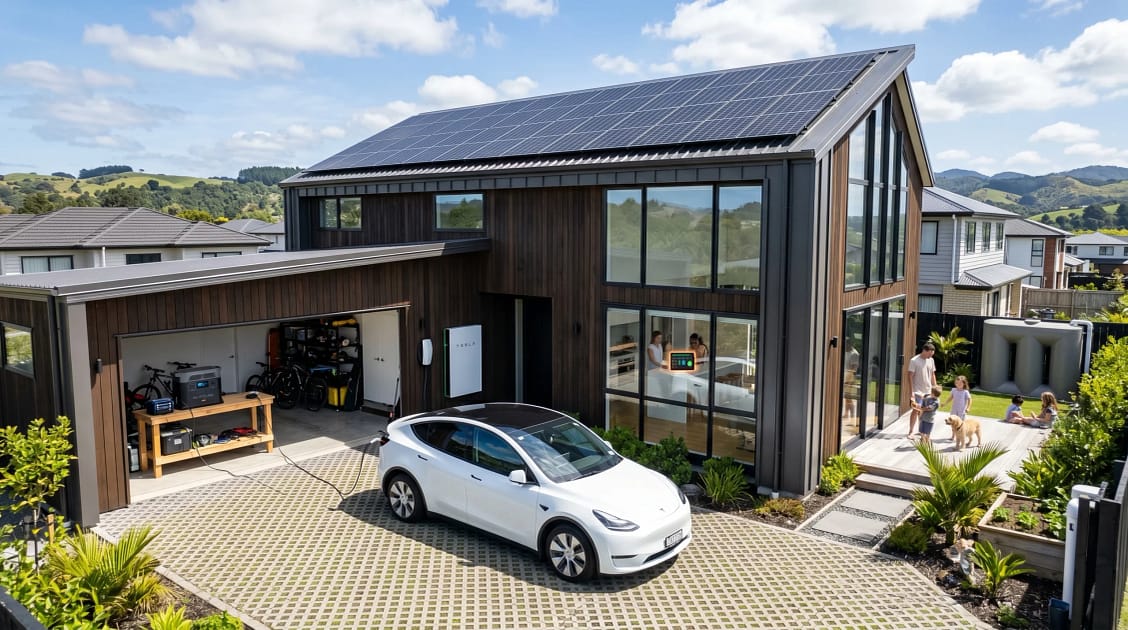
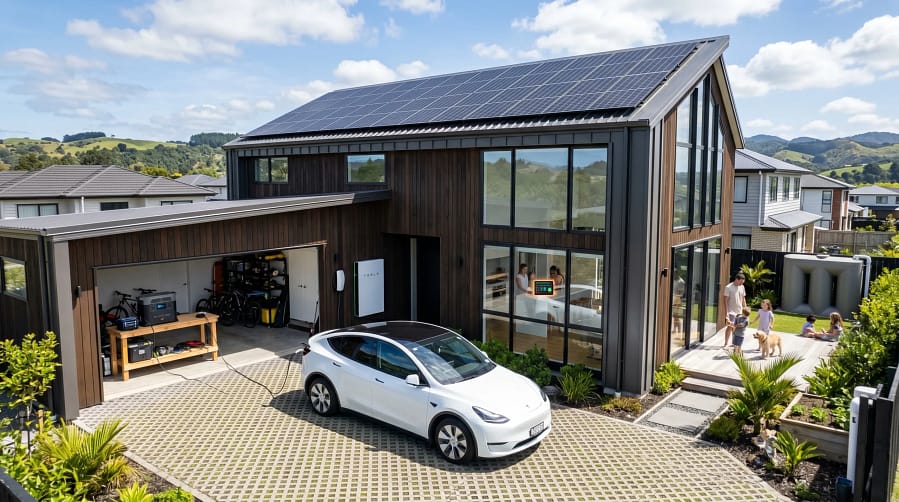
Quick Takeaways
If you’re short on time, here’s what you need to know:
- Home energy systems can reduce electricity bills and improve energy resilience.
- Solar panels are often the foundation of a modern home energy setup.
- Home batteries allow you to store excess solar energy for use later.
- Portable power stations provide backup power without the noise and emissions of traditional generators.
- Smart energy monitoring helps identify waste and reduce consumption.
- EV chargers can be integrated into a home energy system to maximize renewable energy use.
- You don’t need to install everything at once. Many New Zealand households start small and expand over time.
What Is a Home Energy System?
A home energy system is a combination of technologies that help generate, store, monitor, and manage electricity within your household.
Rather than relying entirely on power from the grid, a home energy system can help you:
- Reduce electricity costs
- Improve energy independence
- Lower your carbon footprint
- Provide backup power during outages
- Better understand how your household uses energy
Modern home energy systems are becoming increasingly popular throughout New Zealand as homeowners look for ways to manage rising electricity costs while adopting more sustainable lifestyles.
The Key Components of a Home Energy System
1. Solar Panels
Solar panels convert sunlight into electricity that can be used immediately in your home.
New Zealand’s climate is surprisingly well-suited to solar generation, with many regions receiving sufficient sunlight throughout the year.
Benefits include:
- Lower power bills
- Reduced dependence on the grid
- Long operational lifespan
- Low maintenance requirements
For many households, solar panels are the starting point of a complete home energy system.
Is Solar Worth It in New Zealand?
The answer depends on:
- Your location
- Roof orientation
- Household energy usage
- Electricity rates
- Available incentives or financing
Homes that consume a large amount of electricity during daylight hours often see the greatest benefit.
2. Home Battery Storage
Solar panels generate electricity when the sun shines, but household energy demand doesn’t always match production.
Home batteries solve this problem by storing excess electricity for later use.
Popular benefits include:
- Evening energy use from stored solar power
- Greater energy independence
- Backup power during outages
- Reduced reliance on peak-rate electricity
While batteries add significant upfront cost, prices continue to decline as technology improves.
3. Portable Power Stations
Portable power stations have become one of the fastest-growing categories in home energy.
Unlike traditional petrol generators, they provide silent, emission-free power using rechargeable batteries.
Common uses include:
- Emergency backup power
- Camping and outdoor activities
- Home office protection
- Running essential appliances during outages
For households not yet ready to invest in a full solar-plus-battery system, portable power stations can provide a practical entry point.
Want to estimate your backup power needs?
👉 Try our Portable Power Calculator to determine the battery capacity required for your appliances.
4. Energy Monitoring Systems
Many households don’t realize how much electricity they waste.
Energy monitoring systems provide real-time insights into:
- Electricity consumption
- Appliance usage
- Peak demand periods
- Energy-saving opportunities
By understanding where energy is being used, homeowners can make informed decisions that reduce both costs and environmental impact.
5. EV Charging
As electric vehicle adoption grows across New Zealand, EV charging is becoming an important part of home energy planning.
Home charging systems offer:
- Convenient overnight charging
- Lower charging costs compared to some public chargers
- Better integration with solar energy systems
Some advanced systems can prioritize charging when solar production is highest, helping maximize renewable energy use.
How Much Does a Home Energy System Cost?
Costs vary significantly depending on system size and complexity.
Typical investments may include:
| Component | Approximate Cost Range |
|---|---|
| Solar Panels | $5,000 – $15,000+ |
| Home Battery | $8,000 – $20,000+ |
| Portable Power Station | $500 – $5,000+ |
| Smart Energy Monitoring | $100 – $1,000+ |
| EV Charger | $1,000 – $3,000+ |
Prices vary by brand, installer, location, and capacity requirements.
Reducing Household Energy Consumption
The most sustainable energy is often the energy you don’t use.
Before investing in equipment, consider reducing consumption.
Improve Insulation
Well-insulated homes require less heating and cooling.
Switch to LED Lighting
LED bulbs use significantly less electricity than traditional lighting.
Upgrade Inefficient Appliances
Modern energy-efficient appliances can substantially reduce electricity consumption.
Eliminate Standby Power
Many devices continue consuming electricity when not actively in use.
Use Smart Controls
Timers, smart plugs, and automation can reduce unnecessary energy usage.
Building a Home Energy System Step by Step
A common mistake is trying to install everything at once.
Many homeowners follow a staged approach:
Reduce energy waste through efficiency improvements.
Install energy monitoring.
Add solar panels.
Consider battery storage.
Integrate EV charging and smart energy management.
This approach spreads costs over time while maximizing long-term benefits.
Home Energy Systems and Sustainability
Home energy systems support sustainability by:
- Increasing renewable energy use
- Reducing fossil fuel dependence
- Lowering greenhouse gas emissions
- Encouraging energy awareness
- Improving household resilience
Even small upgrades can contribute to a more sustainable future.
Final Thoughts
Home energy systems are no longer limited to technology enthusiasts or off-grid properties. Advances in solar power, battery storage, portable power stations, and energy monitoring have made these solutions more accessible than ever.
Whether you’re looking to reduce electricity bills, prepare for power outages, support an electric vehicle, or simply live more sustainably, a home energy system can be tailored to your household’s needs.
Start with energy efficiency, expand gradually, and focus on solutions that provide the greatest value for your lifestyle and budget.
For additional tools and resources, visit the Eco TIGA Tool Hub and explore our Portable Power Calculator to begin planning your energy journey today.
Frequently Asked Questions
What is a home energy system?
A home energy system combines technologies that generate, store, monitor, and manage household electricity use.
Do I need solar panels to have a home energy system?
No. Many homeowners begin with energy monitoring devices or portable power stations before investing in solar.
Are home batteries worth it in New Zealand?
For some households, batteries can improve energy independence and provide backup power, particularly when paired with solar panels.
What size portable power station do I need?
The ideal size depends on the appliances you want to power and for how long. A power calculator can help estimate your requirements.
Can solar panels charge an electric vehicle?
Yes. Many homeowners use solar energy to offset EV charging costs and increase renewable energy use.
How can I reduce household energy consumption?
Improving insulation, switching to LED lighting, upgrading appliances, and monitoring electricity usage are among the most effective strategies.