
The kitchen is where most of us meet plastic every single day, usually without even noticing it. Cling film over a bowl, a yoghurt tub in the recycling, a spatula that’s gone a bit soft at the edges from heat. It adds up fast, and it’s also one of the easiest rooms in the house to make real, lasting changes in, because the swaps are visible, the habits are small, and you use this room constantly, so new habits stick quickly.
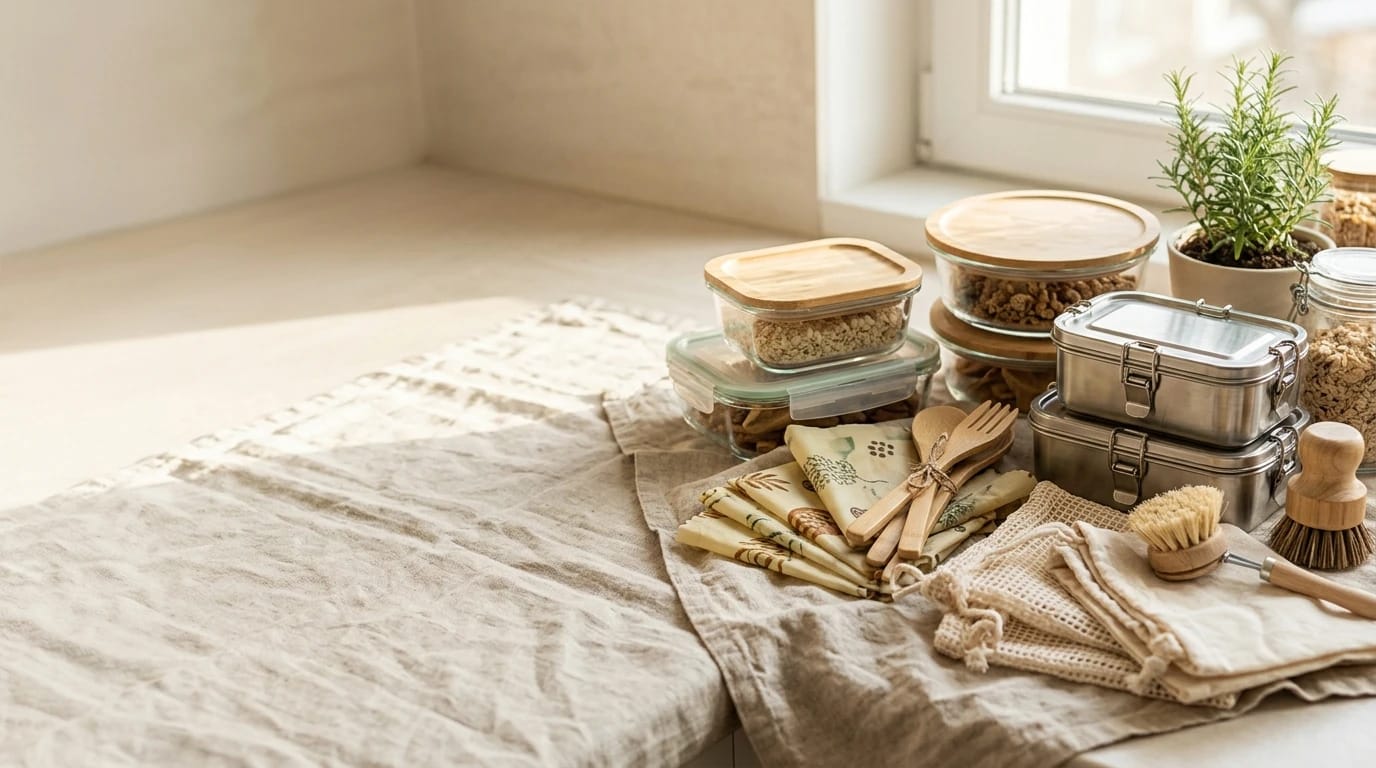
This guide walks through your kitchen zone by zone: pantry, fridge, cooking, and cleaning, with options at different price points so you can start wherever makes sense for your budget right now. Nobody needs to replace everything in one weekend. A plastic-free kitchen is something you build gradually, swap by swap, as the old plastic items wear out or as your budget allows.
Why the kitchen is the easiest room to start with
Most of us use the kitchen multiple times a day, which means you get lots of chances to notice what’s working and what isn’t. If a swap doesn’t suit your routine, you’ll know within a week, not months.
It’s also a room where the plastic is obvious. Cling film, takeaway containers, plastic chopping boards, non-stick pans with a plastic-ish coating, sponges that shed tiny bits of foam. Once you start looking, you’ll spot the plastic everywhere, and that’s actually useful: it gives you a clear list to work from rather than a vague idea of “using less plastic.”
And because kitchen items wear out and get replaced anyway, you don’t need to throw out anything that’s still working well just to make it plastic-free faster. Let things finish their life, then replace with something better.
Pantry and food storage: swapping cling film and plastic containers
Cling film is usually the first thing people think of when they imagine a plastic-free kitchen, and it’s a fair place to start. It’s single-use, it’s hard to recycle, and most households get through a roll every few weeks.
Beeswax wraps are the most common swap, and they genuinely work well for covering bowls, wrapping cheese, or bundling up half a cut vegetable. They’re washable in cool water and last for months with reasonable care. If beeswax isn’t your thing, there are plant-wax versions made without animal products that do the same job.
For containers, the goal is simply to stop buying new plastic ones and start using what lasts. Glass jars you already have from sauces or jam are a free starting point. Stainless steel containers and glass containers with silicone or bamboo lids are a step up if you want something that stacks neatly and goes in the freezer without cracking.
Silicone stretch lids are another handy one. They fit over bowls and tins of different sizes, so you can retire a chunk of your cling film use with a set of five or six lids that get washed and reused for years.
Fridge and freezer: rethinking produce bags and leftovers storage
The fridge is full of small plastic habits that are easy to overlook: the thin bags for loose vegetables, the wrap on leftover bread, the tubs stacked at the back with lids that never quite match.
Reusable produce bags, usually mesh or cotton, replace the thin plastic bags at the fruit and veg aisle. Most supermarkets don’t mind you using your own, and you can often weigh them at checkout the same way. They’re also handy for storing leafy greens in the fridge once you’re home, since the breathable fabric keeps things fresher for longer than a sealed plastic bag does.
For leftovers, glass containers with locking lids are the most common upgrade, mainly because they go from fridge to microwave to dishwasher without the lid warping or the base staining. If budget is tight, keep using mismatched containers you already own and simply stop replacing them with new plastic ones as they wear out.
Freezing food in silicone bags or stainless steel containers instead of single-use freezer bags is a good move too, especially if you batch-cook or freeze portions often. They take a bit more care to pack well, but they hold up over hundreds of uses.
Cooking tools: pans, utensils and bakeware without plastic
This is the zone where plastic hides in places you might not expect. Non-stick coatings, plastic-handled utensils, silicone spatulas with plastic cores, plastic chopping boards that shed microplastic every time you cut on them.
Wooden and bamboo utensils are an easy, affordable swap for spatulas, spoons, and tongs. They don’t scratch pans, they don’t melt near heat, and a single wooden spoon can last for years with the occasional oil rub.
For chopping boards, wood is the obvious replacement for plastic, and it’s actually gentler on knives too. If you cook raw meat often, keeping a dedicated wooden board for that, washed and dried properly after each use, works just as well as plastic for hygiene.
Cookware is a bigger decision and usually a bigger spend, so there’s no need to rush it. Cast iron and stainless steel pans don’t have plastic-based coatings and last decades if cared for properly. When your current non-stick pans wear out, that’s a sensible moment to switch rather than replacing them with more of the same.
Bakeware follows the same logic: stainless steel trays and glass dishes replace non-stick trays over time, and silicone baking mats can replace baking paper for everyday use, though they’re best kept for lower-heat baking rather than very high roasting temperatures.
Cleaning the plastic-free kitchen: sponges, cloths and bottles
The cleaning cupboard is often the most plastic-heavy part of the kitchen, even though it’s the one we think about least.
Sponges are a simple first swap. Compostable cellulose sponges, loofah sponges, or coconut fibre scrubbers do the same job as a synthetic sponge without shedding plastic fibres into your sink water every time you use them.
Cloths made from cotton or linen replace paper towel and synthetic cleaning cloths, and they wash and dry just fine in a normal laundry load. Keeping a small stack near the sink makes it easy to grab one instead of reaching for a roll of paper towel.
Cleaning spray bottles are worth a second look too. Instead of buying a new plastic bottle of spray every time you run out, a refillable glass or stainless steel bottle paired with a concentrate or a simple vinegar-and-water mix cuts down the bottles significantly over a year.
If you’ve already read about how to clean a reusable water bottle properly, the same basic idea applies here: a bit of regular care keeps reusable items working well for a long time, which is really the whole point of swapping to them.
Budget tiers: free swaps, under $20 swaps, and bigger investments
Not every swap needs spending money, and it genuinely helps to know which ones don’t, especially if you’re starting out or watching your budget closely.
Free swaps:
-
Use jars and containers you already have instead of buying new storage.
-
Stop buying new cling film and plastic wrap when the current roll runs out.
-
Use your own containers for buying bulk pantry goods, where the store allows it.
-
Switch to cloth napkins or towels you already own instead of paper towel.
Under $20 swaps:
-
A set of reusable produce bags.
-
Beeswax or plant-wax wraps.
-
A wooden spoon set or a bamboo utensil set.
-
A pack of silicone stretch lids.
-
Compostable sponges or a loofah scrubber, bought in a multi-pack.
Bigger investments (worth doing gradually):
-
A cast iron or stainless steel pan set, replaced piece by piece as old non-stick pans wear out.
-
A set of glass containers with matching lids.
-
A wooden chopping board, especially a larger one if you cook a lot.
-
A refillable cleaning bottle system.
There’s no rule about which tier to start in. Some people like knocking out all the free swaps first to build momentum, others would rather buy one good item, like a solid chopping board, and feel the difference straight away. Either way works, and progress is progress.
Keeping food waste low as you go plastic-free
Going plastic-free in the kitchen and cutting food waste tend to go hand in hand, mostly because good storage keeps food fresher for longer, which means less of it ends up in the bin.
Glass and steel containers, for example, often keep leftovers fresher than a loosely wrapped plastic bag, simply because they seal better. Reusable produce bags do something similar for fresh vegetables, keeping them crisp instead of sweating in a sealed plastic bag.
If reducing food waste is something you want to get more deliberate about, our piece on reducing food waste tips and tricks goes into more detail on planning, storage, and using up what’s already in the fridge before it goes off. It pairs naturally with the swaps in this guide, since better storage habits support both goals at once.
Your plastic-free kitchen starter checklist
If you’d rather work through this at your own pace, here’s a simple checklist to tick off as you go. No pressure to finish it quickly, and no pressure to do it in order.
-
Stop repurchasing cling film; try beeswax or plant wraps instead.
-
Swap single-use produce bags for reusable mesh or cotton ones.
-
Replace plastic food storage with glass or steel as containers wear out.
-
Switch to wooden or bamboo kitchen utensils.
-
Use a wooden chopping board instead of plastic.
-
Replace synthetic sponges with compostable or natural alternatives.
-
Swap paper towel for washable cloths.
-
Choose a refillable bottle for cleaning sprays.
-
Let non-stick pans retire naturally, then replace with cast iron or stainless steel.
-
Revisit your pantry storage and use up what you have before buying new containers.
A plastic-free kitchen isn’t about getting rid of every plastic item overnight. It’s about making better choices as things naturally need replacing, and feeling good about the small swaps along the way. Every jar you reuse and every roll of cling film you don’t buy is genuinely worth something, even if it feels small in the moment.
If you want a ready-made shopping list to kick things off, check out the Eco Waste Free Starter Kit for a simple next step.