
Most people replace a dish brush without thinking about it. It sits by the sink, gets used every day and ends up in the bin when it looks tired. That makes it a good first swap: it is cheap, you will use it daily and the choice you make shows up in your rubbish bin within months.
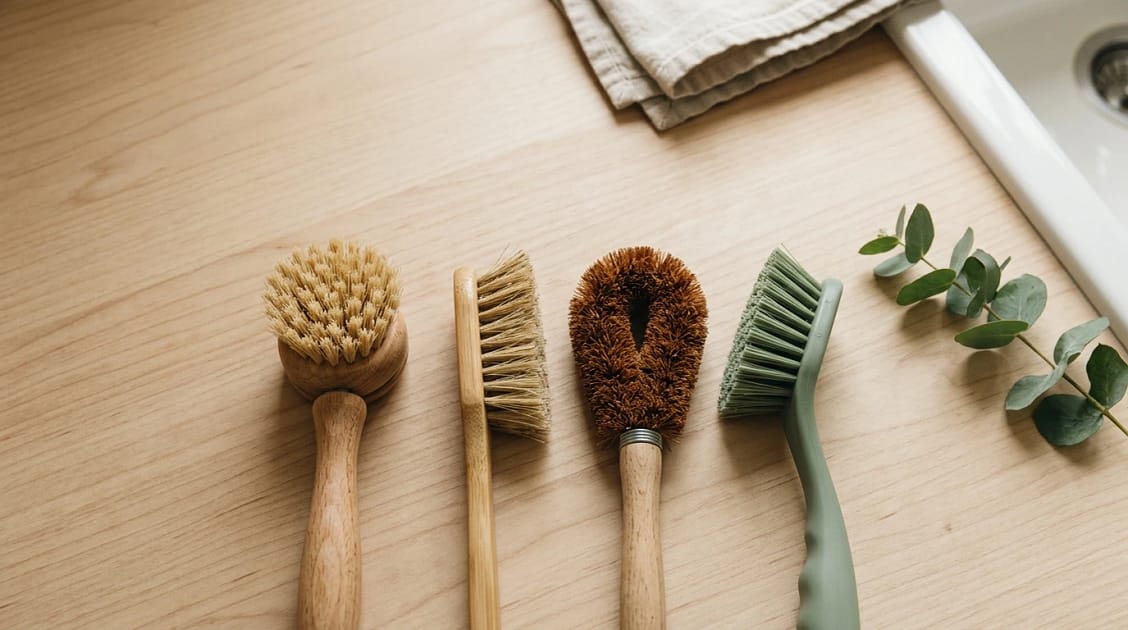
It is also easy to get wrong. A brush that looks natural but wears out fast, or a handle that can’t be separated from its bristles, can create more waste than the plastic brush it replaced. This guide compares the common materials on four measures: how long they last, how to care for them, whether the head can be replaced, and what happens when you are done with them. If you are working through other swaps too, the plastic-free kitchen swaps guide covers the wider picture.
Why a dish brush is a surprisingly good place to start
A dish brush is used every day, wears out predictably, and costs little. You find out quickly whether a swap works for you and a poor choice doesn’t cost much to correct.
Longevity matters more here than the material label. A brush that lasts twice as long means half as many brushes made, shipped and thrown away, whatever it is made from. So, the best eco-friendly dish brush is the one that suits how you wash up and keeps working, not the one that looks the greenest on the shelf.
What your brush is made of, and why it matters
Most eco brushes have two parts: a handle and bristles. They are often made of different materials and that affects both durability and disposal.
Wood
Wooden handles are usually a hardwood such as beech, often finished with oil or wax. Wood is sturdy and feels good in the hand. It can swell, crack or darken if it sits wet, so how you store it matters. A plain oiled or unfinished handle is easier to compost than a heavily varnished one.
Bamboo
Bamboo is a fast-growing grass and it makes a light, hard handle that resists water reasonably well. Because it is lightweight and cheap to produce, it is the most common material on the market. It can split along the grain if it is left soaking or dries out repeatedly and it breaks down slowly in a compost heap.
Coconut fibre
Coconut fibre (also called coir) comes from the husk. The fibres are stiff and coarse, so they scrub well on baked-on food. They are also fully natural and compostable. The trade-off is that they can feel harsh on delicate surfaces and they can shed fibres as they wear.
Plant bristles
Sisal, agave and similar plant fibres are the other common natural bristle. They are firm, tolerate hot water and are usually a little softer than coconut. Like coconut, they wear down with use and eventually go soft or splay out.
Recycled plastic
Recycled plastic keeps existing material in use instead of making new plastic and it tends to be tough and water-resistant. The bristles on many brushes are nylon or another plastic even when the handle is wood or bamboo. Check the product description, because a wood-handled brush with nylon bristles is not fully compostable.
How long each type really lasts
Lifespan depends on how you use the brush, how hard you scrub and whether it dries between uses. No material has a fixed lifespan and anyone quoting an exact number for all kitchens is guessing. Here is how the materials compare in general terms.
- Plastic bristles (recycled or otherwise) usually outlast natural bristles, because they don’t rot or soften. They can still bend and flatten with heavy use.
- Coconut and plant bristles wear faster and soften with water. The more they stay damp, the quicker they go.
- Handles usually outlast the bristles. Wood and bamboo can last a long time if they dry properly and they are the part most worth keeping.
These habits add the most life to any brush:
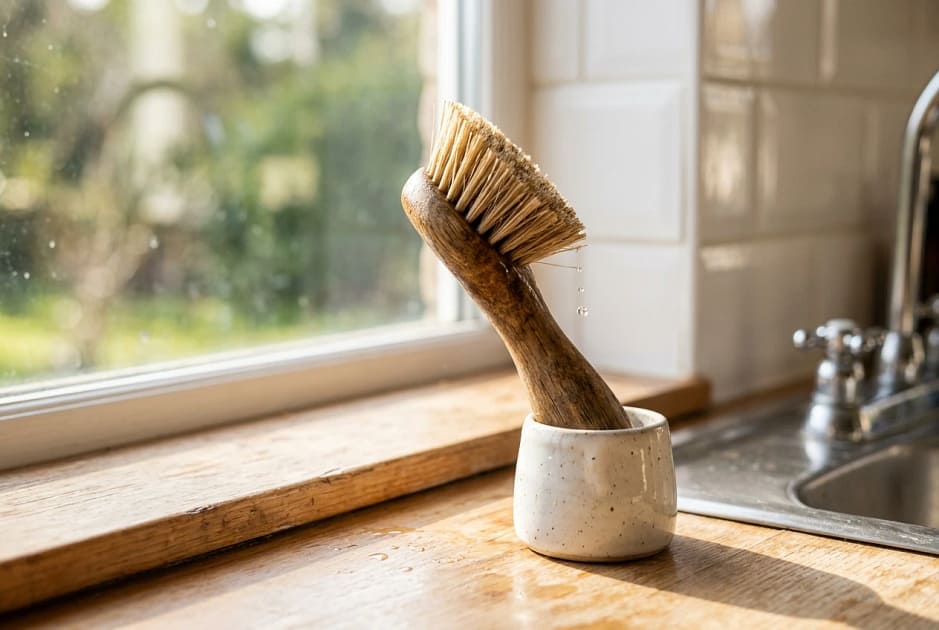
- Rinse out food and soap after each use.
- Shake off the water and let the brush stand with the bristles up.
- Keep it where air can reach it, not in a closed pot or a puddle on the sink edge.
- Don’t leave it soaking in a sink or bowl of water.
- Match the brush to the job (see below), so you aren’t scrubbing a cast-iron pan with bristles meant for glasses.
Replaceable heads vs one-piece brushes
A replaceable head usually produces less waste. The bristles are the part that wears out first and the handle is the part that is bulkiest to throw away. If you can swap only the head, you keep the handle for years and discard a small amount.
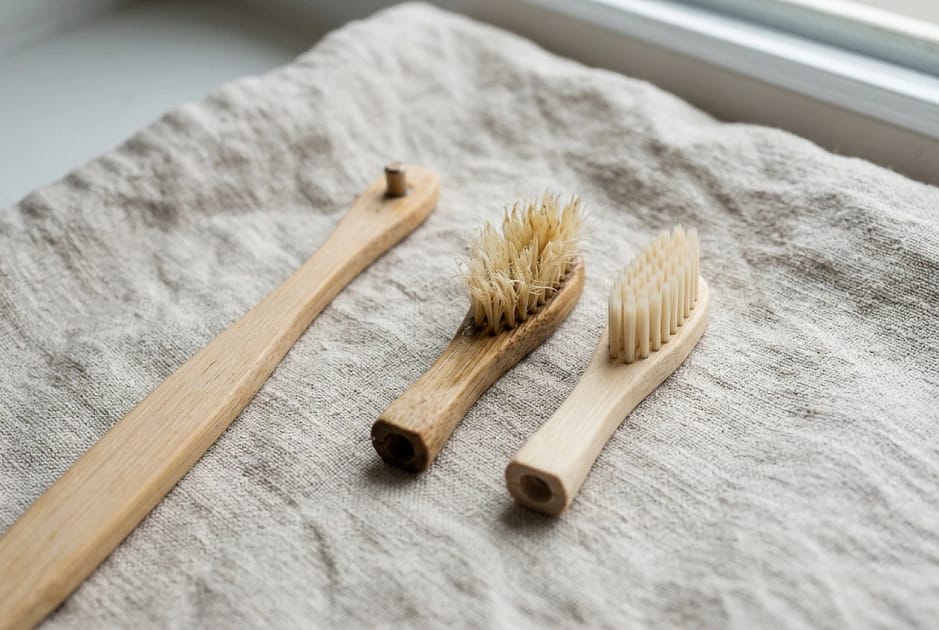
Check the design before you buy. Heads that clip, screw or push onto the handle are easy to swap. Some heads are held on with a tight friction fit that can loosen over time, so a firm connection matters. Also check that the manufacturer sells replacement heads in the style you have, because a replaceable design only helps if heads remain available.
One-piece brushes are simpler and usually cheaper at the start. If the bristles are plant fibre and the handle is untreated wood or bamboo, the whole brush can often go in the compost at the end, so a one-piece brush can still be a reasonable choice. A one-piece brush with nylon bristles is the weakest option, because you throw out the whole thing and can’t separate the parts.
Which brush suits which job
- Pots and pans: coconut fibre or firm plant bristles work well on stuck-on food. A comfortable grip helps if you scrub a lot.
- Glassware: choose softer bristles on a longer handle, so you reach the bottom of a glass without scratching it.
- Cast iron: a stiff natural brush or a coconut-fibre brush handles the surface well and a firm brush is useful for lifting residue. Dry the pan right after washing, as you would anyway.
- Non-stick: use a softer brush. Stiff bristles can scratch the coating and a damaged coating is a reason to replace the whole pan.
If you want a single brush for everything, medium-stiffness plant bristles are the safest compromise. A second, softer brush for glasses and non-stick pans is worth having if you wash those often.
How to dry, clean and sanitize your brush
A brush that stays wet grows mould and smells bad and natural fibres suffer most from that. Drying is the single most useful habit.
- After washing up, rinse the brush under hot water and shake it out.
- Stand it with the bristles pointing up, or hang it, in a spot with some airflow.
- Once a week, give it a deeper clean: soak the head in hot water with a little washing-up liquid, scrub the bristles against each other and rinse well.
- If it needs sanitizing, soak the head for a short time in a mix of white vinegar and hot water, then rinse and dry fully. Plastic-bristled brushes with no wooden parts may be dishwasher safe, so check the maker’s instructions.
- Keep wooden and bamboo handles out of the dishwasher, because the heat and moisture can split them.
Replace the brush or head when the bristles are flattened or falling out, when it smells even after cleaning, when you see mould spots that don’t rinse off, or when the handle cracks. A brush that has reached that point isn’t cleaning well and swapping it is better than keeping it out of guilt.
What to do with an old brush
Check what the brush is made of, then take the most useful route.
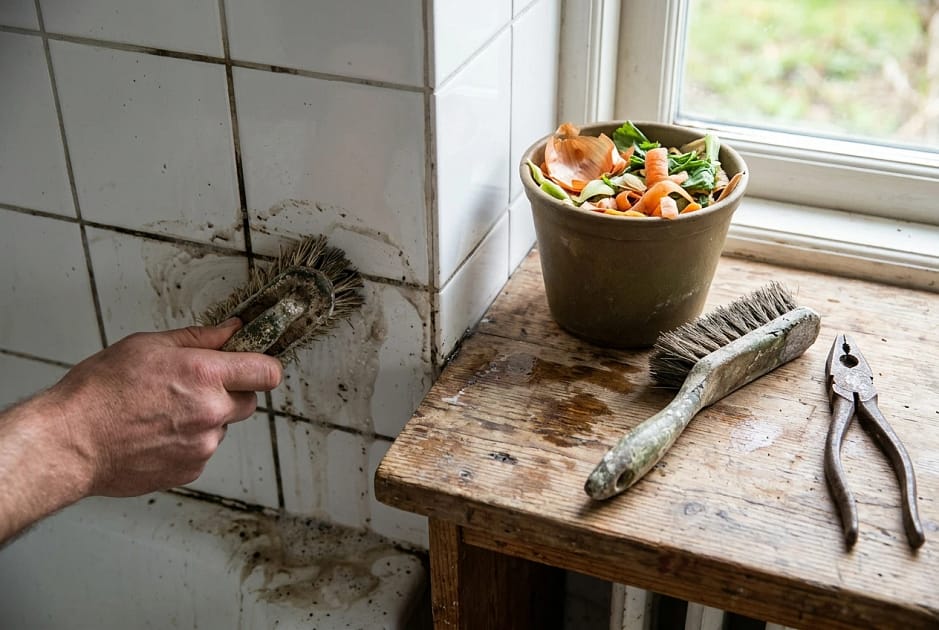
- Reuse first. An old brush is still good for scrubbing grout, cleaning shoes, scraping garden tools and cleaning around taps and drains. This extends its life without any effort.
- Compost it. If the bristles are plant fibre or coconut and the handle is untreated wood or bamboo, remove any metal wire or staples with pliers and cut the handle into smaller pieces so it breaks down faster. Bamboo and hardwood are slow and they may take longer than kitchen scraps.
- Separate the parts. If the brush has nylon bristles, compost the handle (if it is untreated) and put the bristles in the rubbish.
- Bin it when the brush is varnished, glued together, or made of mixed materials you can’t separate. Check whether recycling is available locally for the plastic parts, because rules vary.
A varnished or painted handle should be treated as general rubbish unless the seller says it is compostable.
Our picks by situation
Best on a budget: the cheapest option is the brush you already own. Use it until it wears out, then replace it with a one-piece brush that has plant or coconut bristles and an untreated wooden or bamboo handle. These are inexpensive and easy to compost at the end.
Best for longevity: a brush with a sturdy wooden or bamboo handle and a replaceable head. You replace the part that wears out and keep the rest. Check that spare heads are sold and that the head fits firmly. If you want the bristles themselves to outlast natural fibre, a replaceable head with recycled plastic bristles is the longer-lasting option, though it adds plastic waste when the head is replaced.
Best for beginners: a bamboo-handled brush with medium plant-fibre bristles, ideally with a replaceable head. It copes with most jobs, is forgiving if you forget to dry it once or twice and is simple to dispose of. Once you know what you like, a softer or stiffer second brush is an easy addition.
Where to go next
A dish brush is one small swap and there are plenty more in the kitchen. Pair this with the Eco TIGA Eco Swap Finder to find the next easy swap for your kitchen and read the Low-Waste Cleaning guide for the rest of your cleaning routine.