
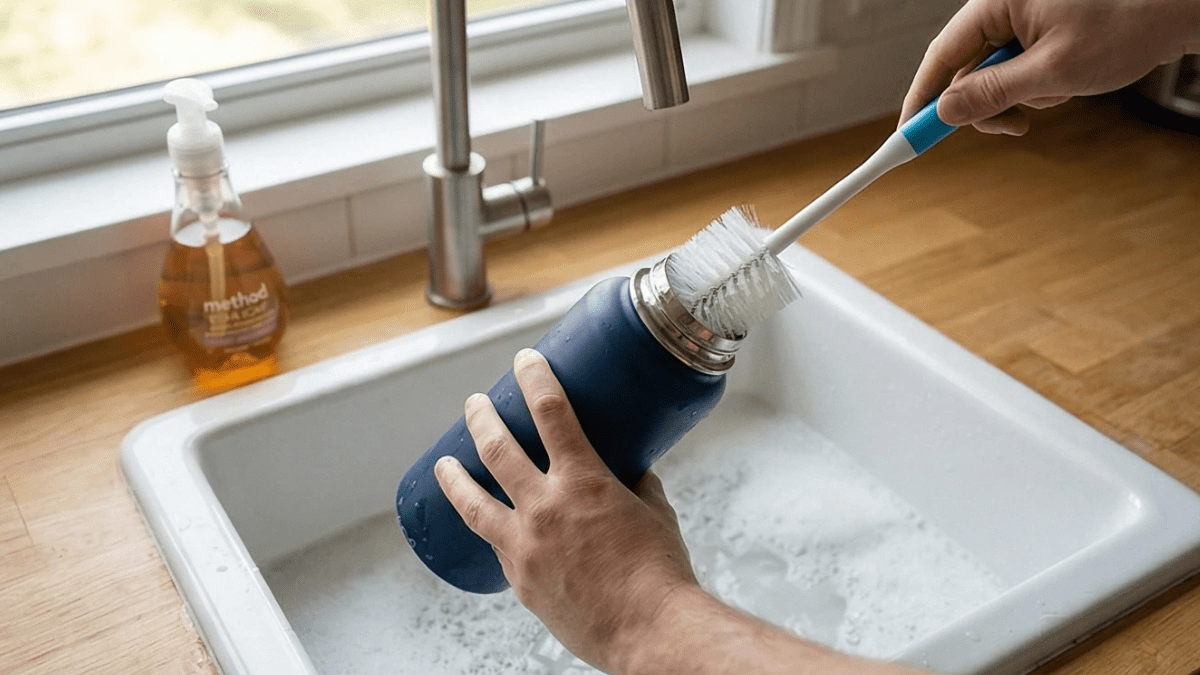
Quick Answer: How do you clean a reusable water bottle?
To clean a reusable water bottle properly, rinse it daily with warm water and dish soap, scrub the inside and lid with a bottle brush, and let it air dry completely. For best results, deep clean it once a week using warm soapy water or natural cleaners like baking soda or vinegar to remove bacteria, odours and buildup.
Reusable water bottles are one of the easiest eco-friendly swaps you can make. They reduce plastic waste, save money, and help you stay hydrated throughout the day.
But if they’re not cleaned properly, they can quickly build up bacteria, odours, and residue.
If you’re already using a reusable bottle as part of a more sustainable lifestyle, keeping it clean ensures you get the full benefit. (If you’re still deciding whether to switch, here’s a breakdown of the benefits of using reusable water bottles)
In this guide, you’ll learn exactly how to clean your bottle properly, avoid common mistakes, and keep it fresh long-term.
Step 1: Understand Why Cleaning Matters
Even if your bottle looks clean, it can still contain:
- Bacteria from your mouth
- Moisture that encourages mould
- Mineral buildup
- Residue from drinks
Without proper cleaning, your bottle can become unhygienic.
👉 This is one of the hidden downsides people don’t consider when switching from single-use bottles. (Compare this with tap water vs bottled water to see why reusable options still come out ahead overall.)
Step 2: Clean Your Bottle Daily (Quick Routine)
Daily Cleaning Steps:
- Rinse with warm water after use
- Add a drop of dish soap
- Shake or lightly scrub
- Rinse thoroughly
- Air dry with the lid off
💡 Even this 30-second habit can prevent most odour and bacteria issues.
Step 3: Deep Clean Once a Week
Weekly Deep Clean:
- Fill with warm soapy water
- Scrub inside using a bottle brush
- Clean the lid and seal thoroughly
- Rinse well
- Air dry upside down
👉 The lid is where most buildup hides – don’t skip it.
Step 4: Use Natural Cleaning Methods
If you prefer eco-friendly cleaning:
- Baking soda + warm water → removes odours
- Vinegar soak → breaks down buildup
- Hot water rinse → helps sanitize
These methods are simple, affordable and align with a low-waste lifestyle.
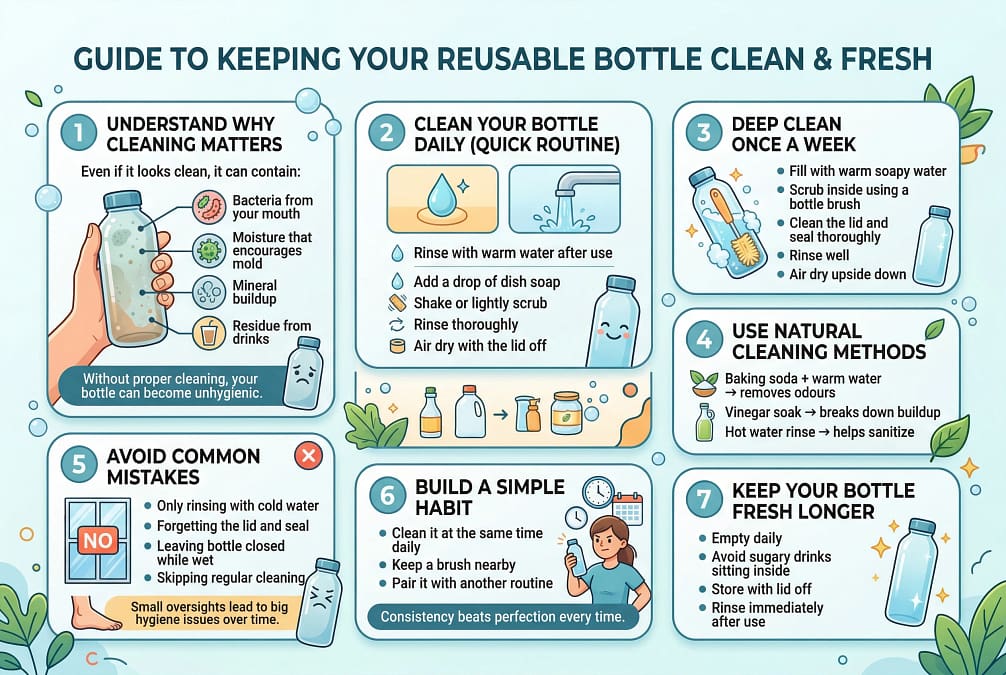
Step 5: Avoid Common Mistakes
- Only rinsing with cold water
- Forgetting the lid and seal
- Leaving bottle closed while wet
- Skipping regular cleaning
Small oversights lead to big hygiene issues over time.
Step 6: Build a Simple Habit
The easiest way to stay consistent:
- Clean it at the same time daily
- Keep a brush nearby
- Pair it with another routine
Consistency beats perfection every time.
Step 7: Keep Your Bottle Fresh Longer
- Empty daily
- Avoid sugary drinks sitting inside
- Store with lid off
- Rinse immediately after use
These habits reduce the need for frequent deep cleaning.
People Also Ask
How often should you wash a reusable water bottle?
You should rinse your reusable water bottle daily and deep clean it at least once a week to prevent bacteria buildup and odors.
Why does my reusable water bottle smell bad?
Bad smells are usually caused by bacteria buildup, especially in the lid, seal or areas that are not cleaned properly.
Can bacteria grow in reusable water bottles?
Yes, bacteria can grow in reusable bottles if they are not cleaned regularly, particularly in warm and moist conditions.
Is rinsing a water bottle enough?
No, rinsing alone is not enough. Soap and regular scrubbing are needed to properly remove bacteria and residue.
Final Thoughts
Next time you finish your drink, pause before putting your bottle aside.
Because it’s not just about keeping it clean, it’s about making sure something you use every day stays safe, fresh and long-lasting.
Start with one simple habit: clean your bottle daily.
It takes less than a minute, but over time, it makes all the difference for your health and your sustainable routine.
If you’re considering switching to reusable bottles, here’s a full eco hydration guide →Reusable Water Bottles: A Small Change with Big Impact – SmartySIP
Related Article
This is a really solid, practical guide, simple but something a lot of people overlook. I like how you emphasized consistency over perfection, because honestly that’s where most habits either stick or fall apart.
One thing that stood out to me is how easy it is to forget the lid and seal. That’s probably where most of the “mystery smell” comes from, even when the bottle itself looks clean.
I’ve also noticed that when I stay on top of quick daily rinses, the weekly deep clean is way easier and doesn’t feel like a chore. It’s one of those small habits that pays off more than people expect.
It’s interesting too how something meant to be healthier and eco-friendly can actually go the opposite direction if it’s not maintained properly, kind of a good reminder that the little details matter.
Do you personally stick with natural cleaners like vinegar and baking soda most of the time, or do you switch between those and regular dish soap depending on the situation?
Appreciate your response to the article Jason. Answering your question: Do you personally stick with natural cleaners like vinegar and baking soda most of the time, or do you switch between those and regular dish soap depending on the situation?
I sometimes clean with minimal dish soap and then rinse with very hot water; however, I personally prefer to use salt with couple of drops of water, its easy and portable