
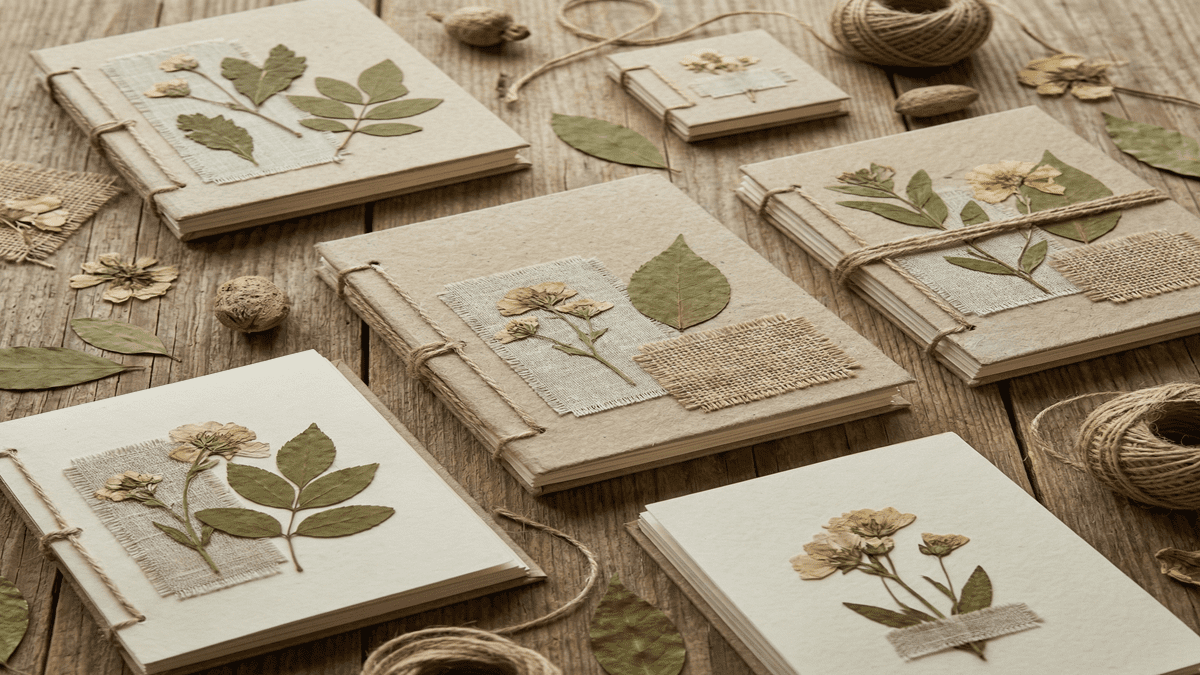
There’s something quietly radical about making your own journal.
Not buying one shrink-wrapped in plastic.
Not ordering one shipped across oceans.
But crafting one from what already exists in your home.
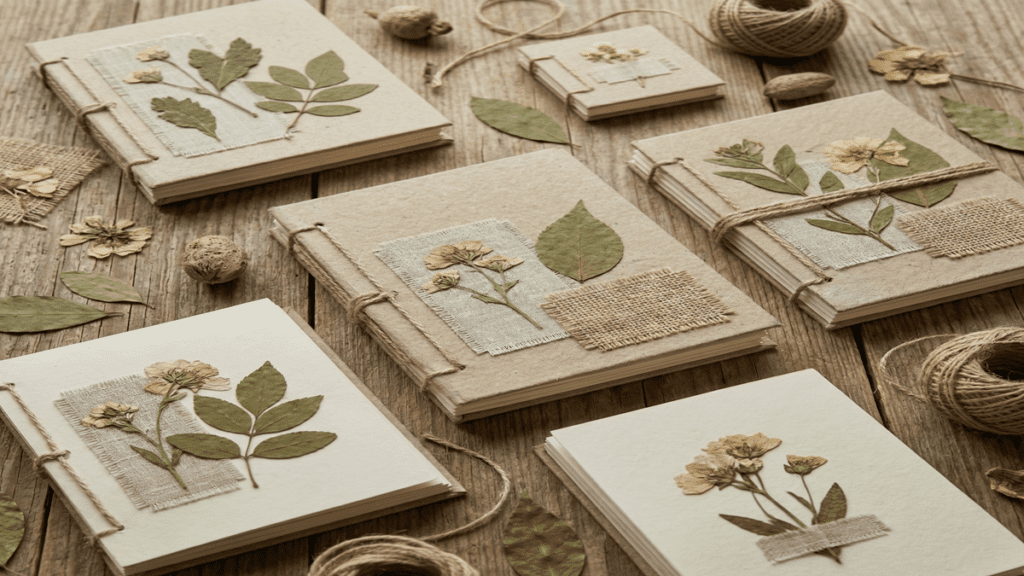
Sustainable, Simple & Beautiful
An eco-friendly journal isn’t just paper folded together. It’s rescued scraps, reclaimed stories, and a small refusal to waste something useful. If you love mindful living, creative reuse, and low-waste projects, this guide will walk you through 10 practical ways to create your own sustainable journal.
Let’s turn leftovers into legacy.
1. Why Make an Eco-Friendly Journal?
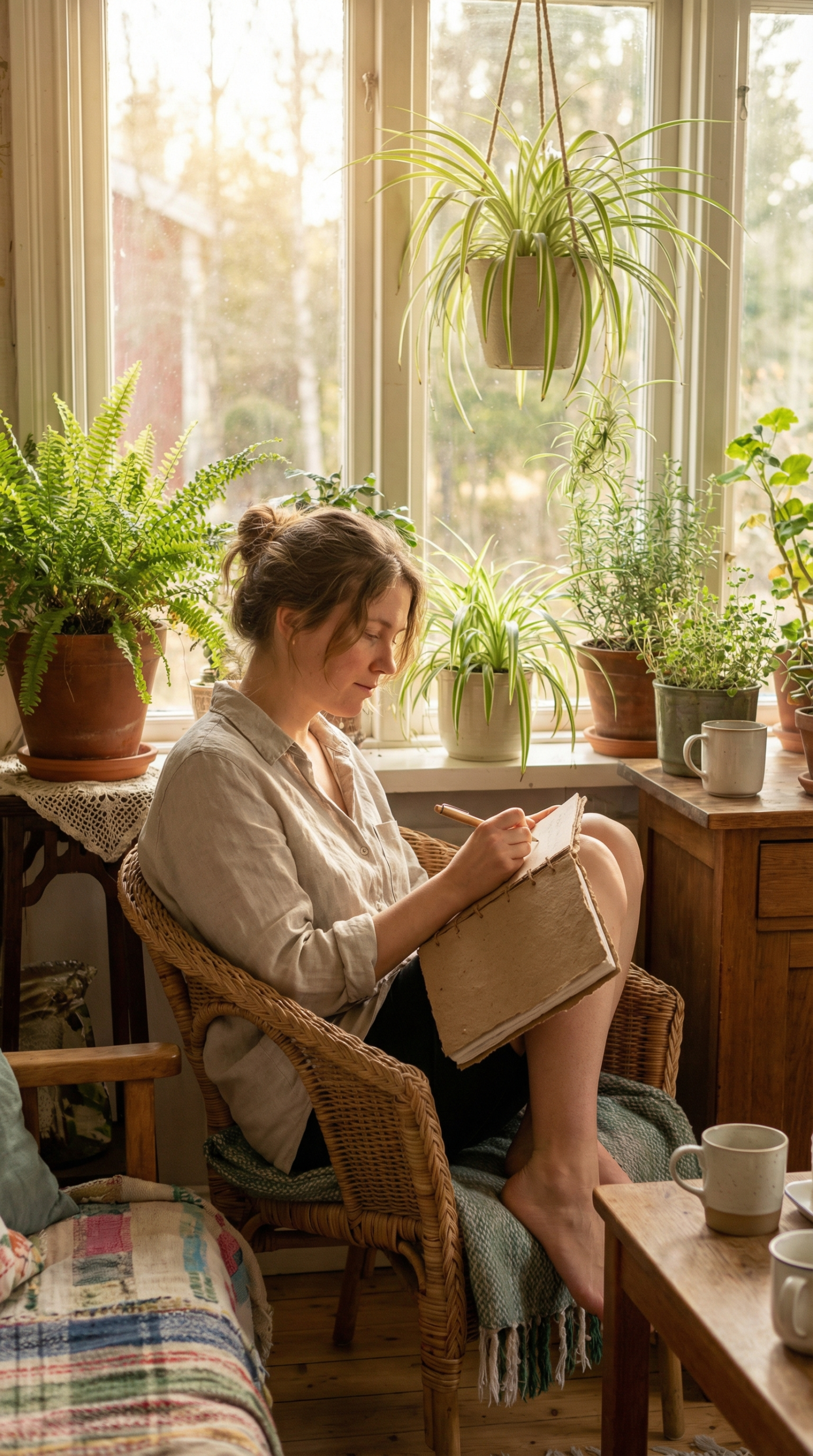
Before we fold a single page, here’s why these matters.
- It reduces paper waste
- It gives packaging a second life
- It avoids plastic-laminated store notebooks
- It supports mindful consumption
- It costs almost nothing
If you’ve explored our thoughts on mindful buying and reducing unnecessary consumption, this project is the hands-on extension of that mindset.
Making something useful from materials you already have shifts you from consumer to creator. And that’s powerful.
2. 10 Sustainable Materials You Can Use
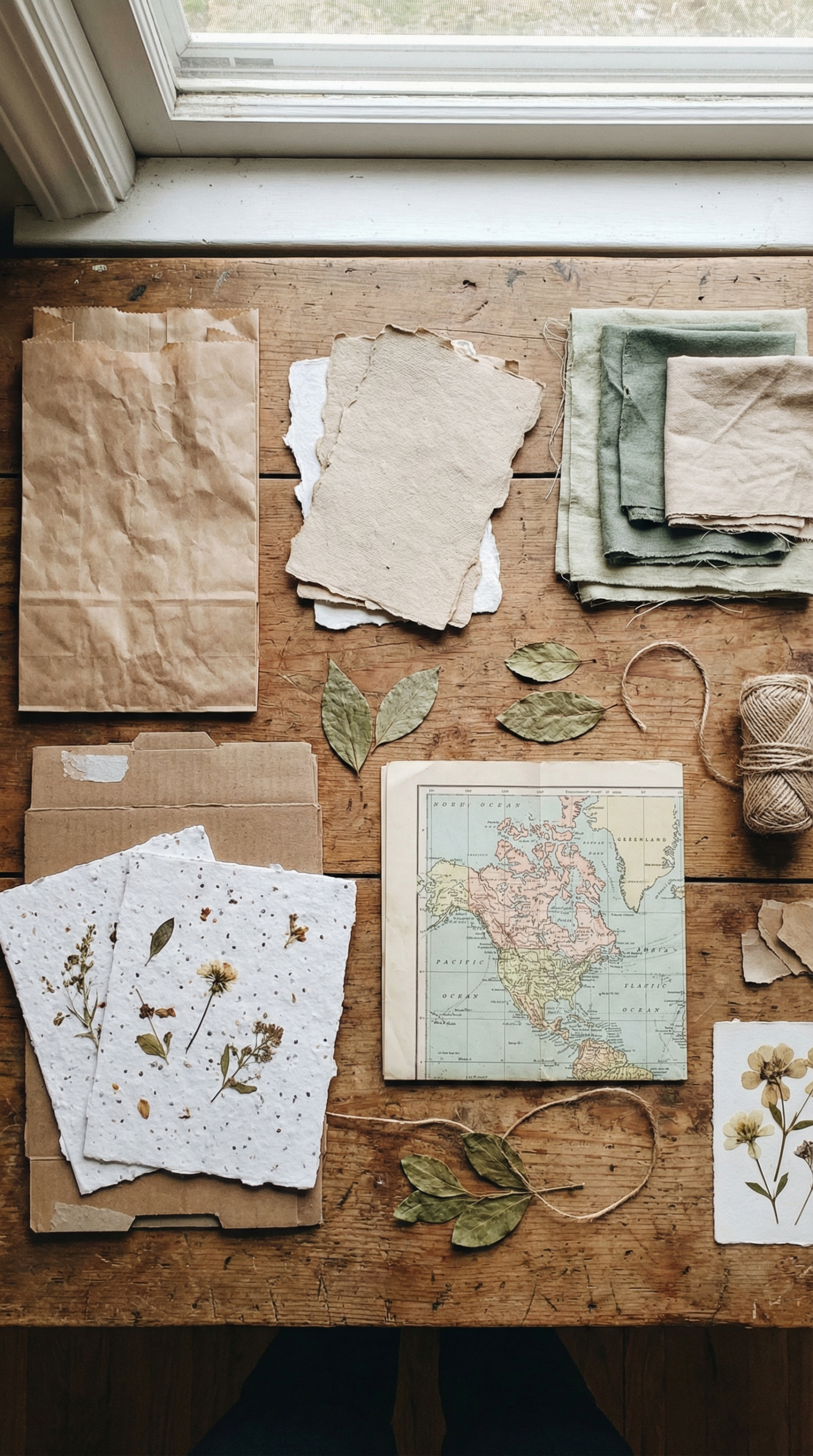
Look around your home. Your journal is already there.
Here are ten materials perfect for eco-friendly journal making:
- Scrap printer paper (single-sided sheets)
- Old notebooks with unused pages
- Brown paper bags
- Cereal boxes
- Cardboard packaging
- Fabric scraps
- Old calendars
- Wallpaper samples
- Junk mail (non-glossy)
- Seed paper
If you’re unsure about paper sustainability, check out resources like Forest Stewardship Council for responsible paper standards.
Tip: Avoid heavily glossy paper where possible, as it’s harder to recycle.
3. How to Make a Simple 10-Page Folded Journal
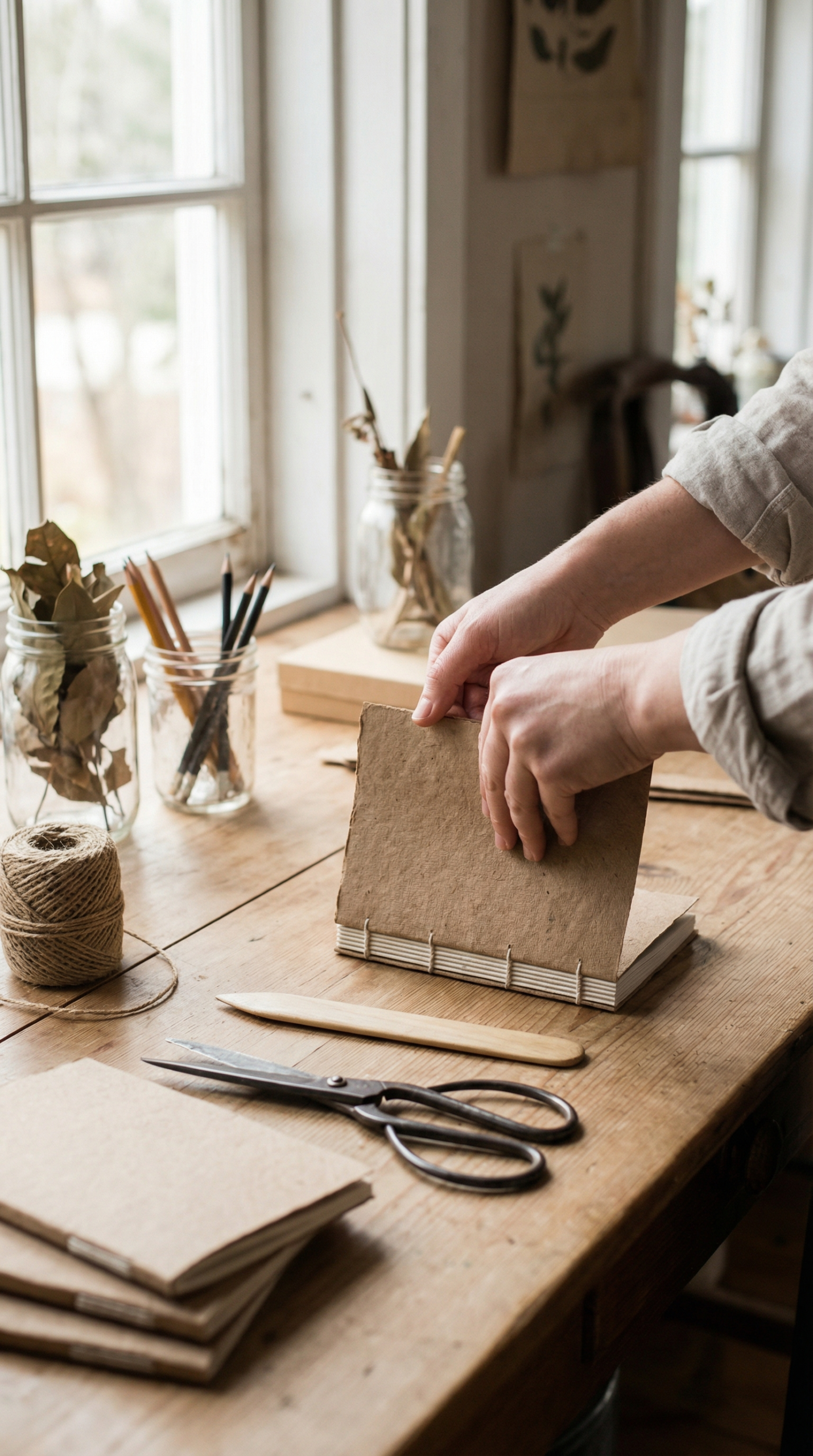
This is the easiest beginner-friendly method.
What You Need:
- 5 sheets of recycled paper (folded = 10 pages)
- Cardboard for cover
- Scissors
- Hole punch or needle
- Twine or thread
Steps:
- Stack 5 sheets evenly.
- Fold in half.
- Cut cardboard slightly larger for front and back covers.
- Fold everything together.
- Punch 2–3 holes along the spine.
- Thread twine through and tie securely.
That’s it. A 10-page eco journal in under 10 minutes.
4. 10 Creative Cover Ideas (Using What You Already Have)
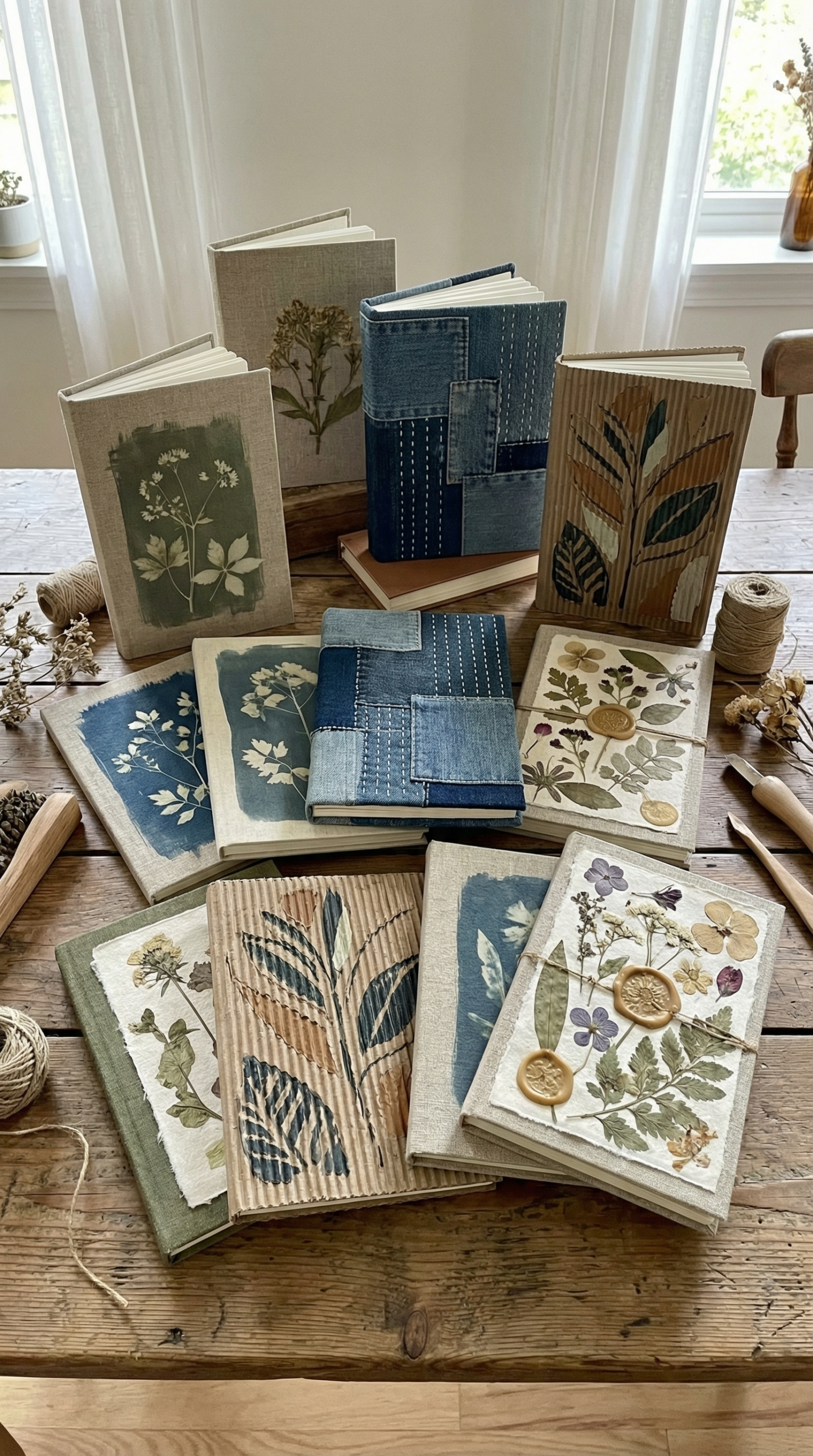
Your cover sets the tone. And it doesn’t need to cost a cent.
- Pressed leaves glued onto cardboard
- Coffee-dyed kraft paper
- Old denim stitched over cardboard
- Fabric scrap wrap
- Hand-drawn botanical art
- Collaged magazine cut-outs
- Minimalist plain cardboard with twine
- Old map covers
- Reused gift wrap
- Patchwork stitched scraps
Think texture. Think story. Think “this used to be something else.”
5. 10 Low-Waste Binding Methods
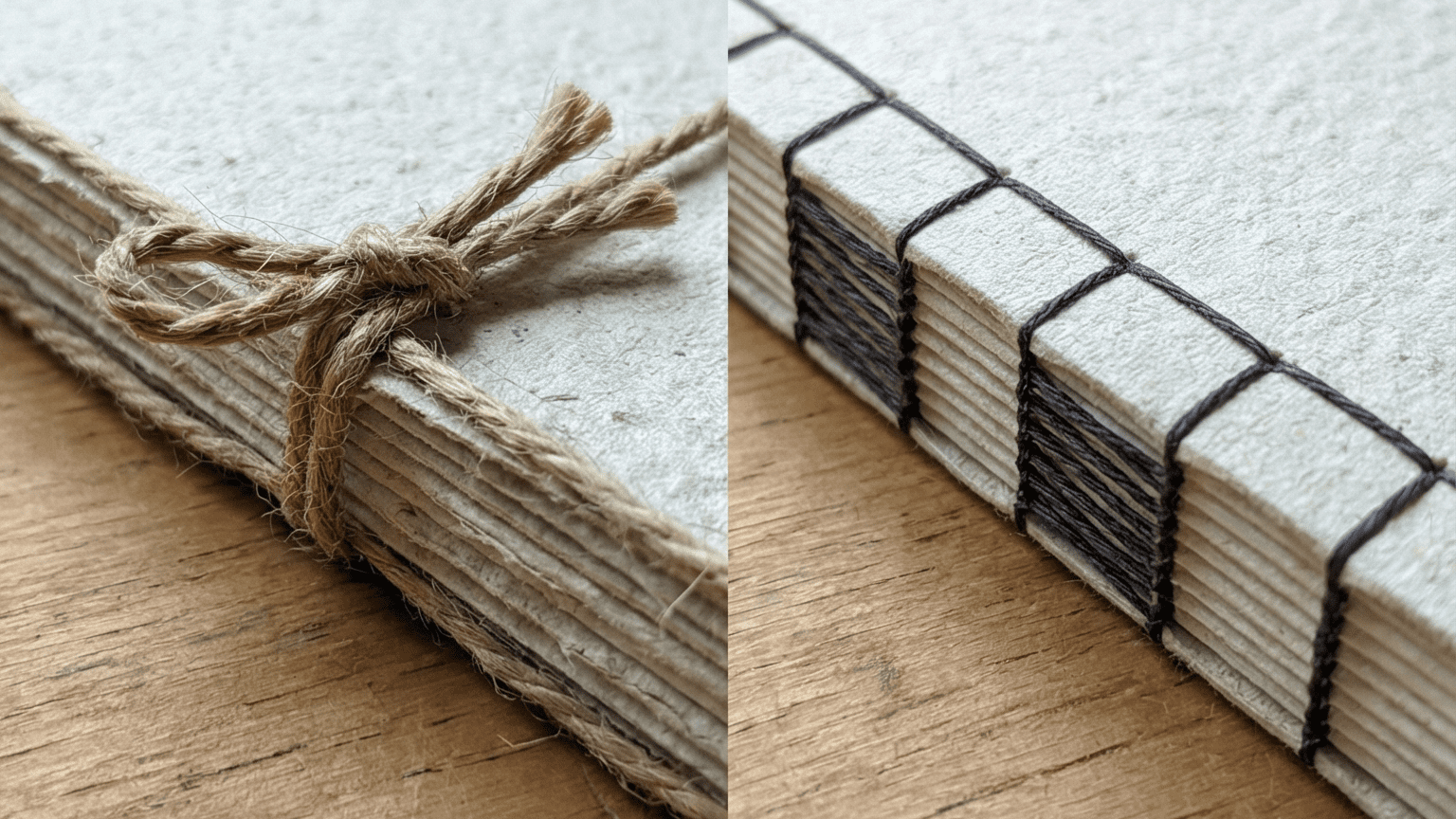
Binding is where personality shines.
- Twine stitch
- Saddle stitch
- Japanese stab binding
- Reused ribbon tie
- Binder rings
- Hemp cord
- Elastic wrap
- Reclaimed yarn
- Wooden skewer binding
- Simple recycled staples
Japanese stab binding is especially beautiful if you want a more structured look.
6. Decorating Without Waste
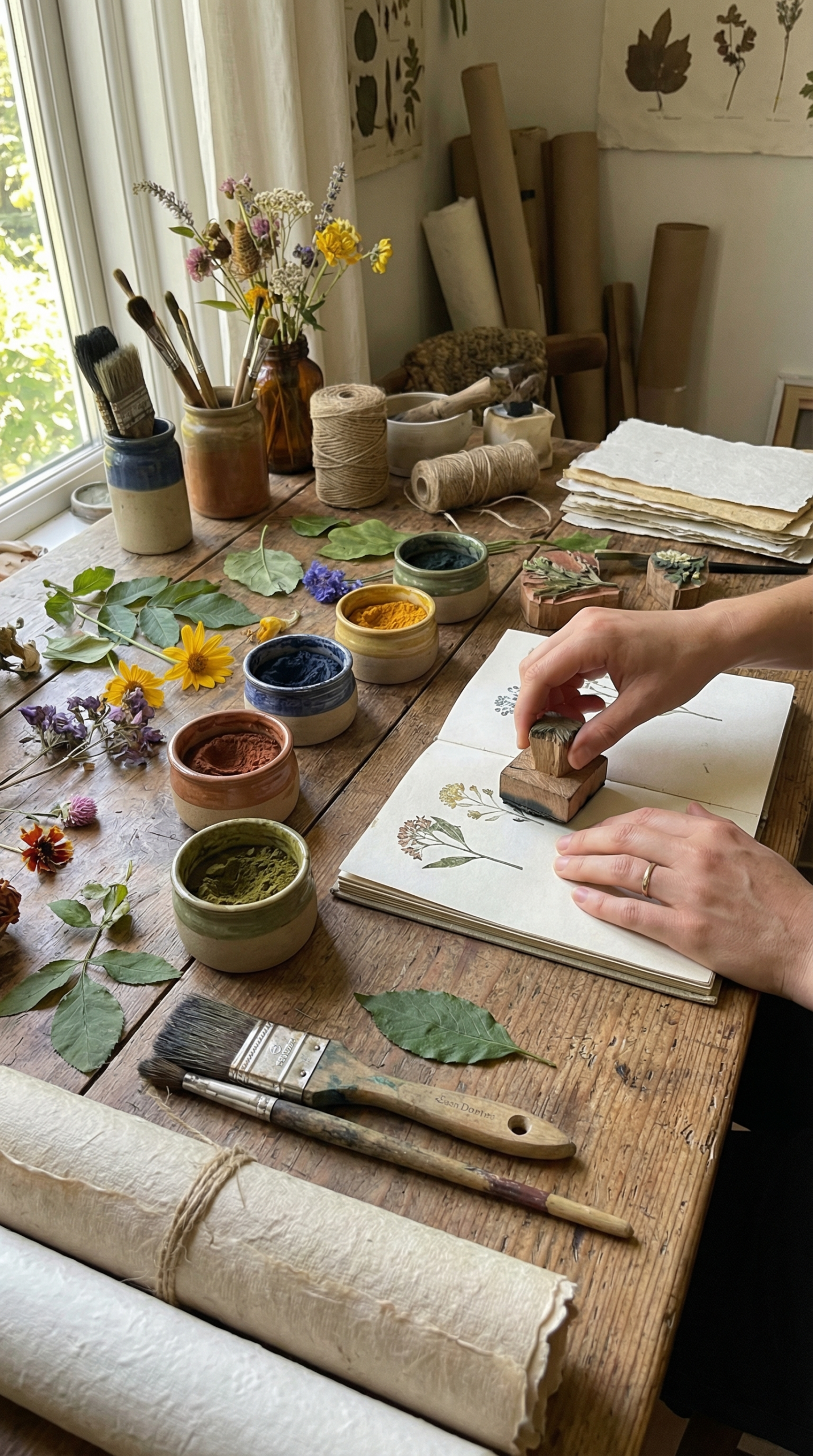
Step away from plastic stickers.
Try:
- Homemade stamps carved from potatoes
- Leaf printing
- Pencil sketches
- Natural dyes from tea or coffee
- Thread accents
- Minimalist ink illustrations
Nature provides better decoration than any craft aisle.
7. 10 Thoughtful Gift Ideas
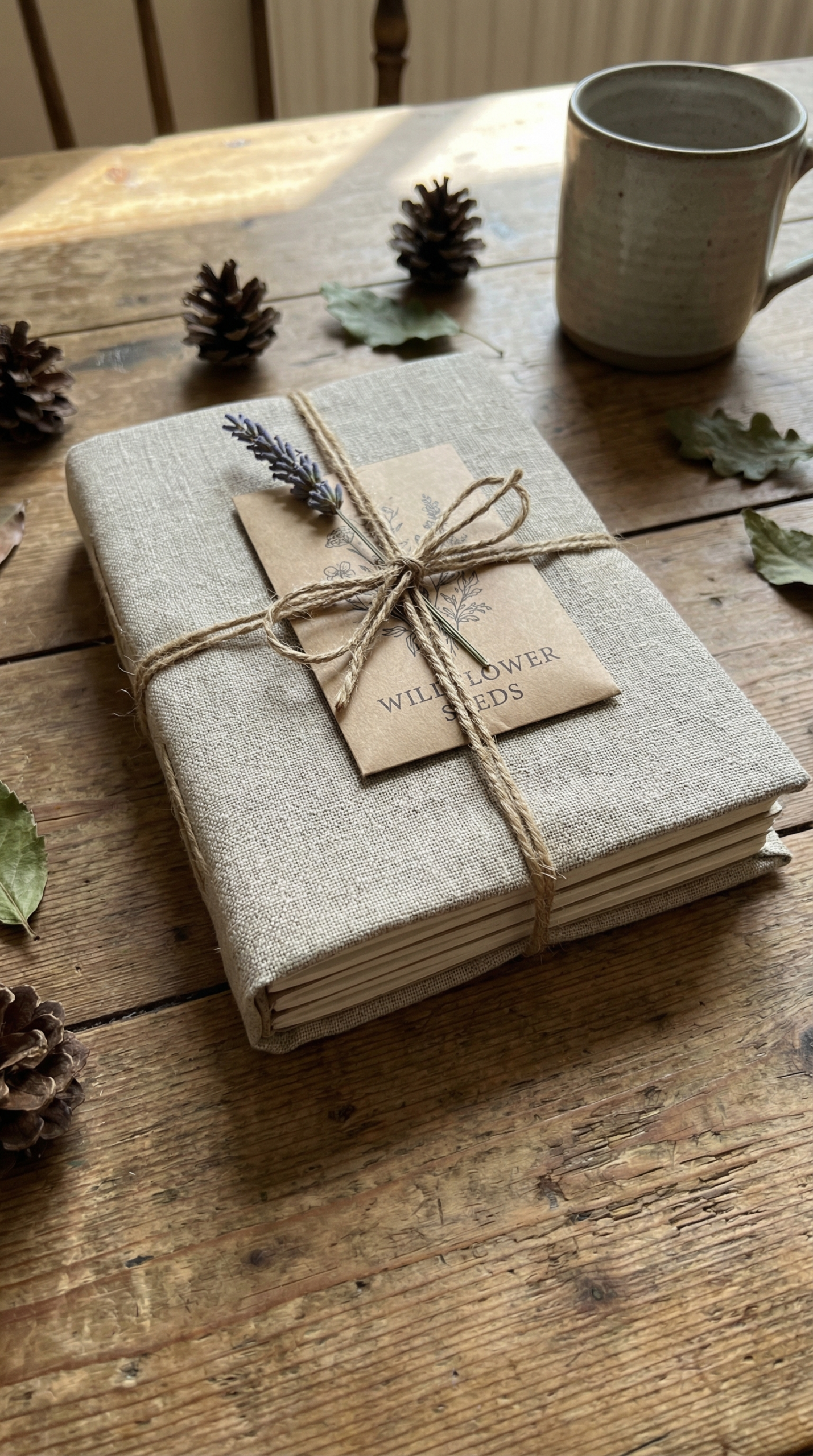
Eco journals make beautiful low-waste gifts.
- Add a handwritten letter inside
- Include a small seed packet
- Create a gratitude journal
- Turn it into a garden log
- Make a recipe notebook
- Add 10 journaling prompts
- Create a travel memory book
- Add a sustainable living quote
- Pair with a pencil instead of a plastic pen
- Wrap in cloth instead of gift wrap
Thoughtful beats expensive every time.
8. Cost Breakdown: Making 10 Journals for Less
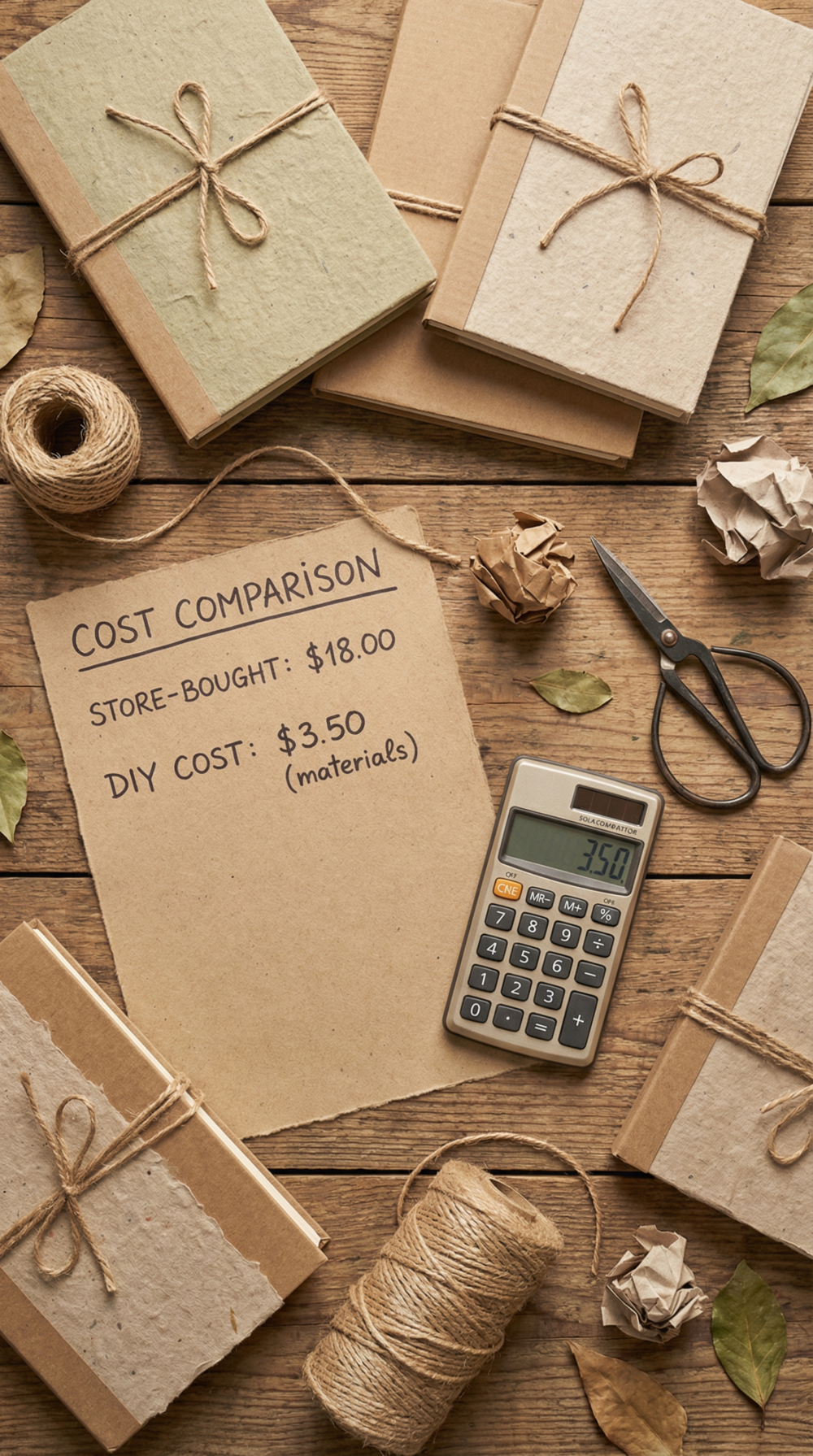
If you’re using reclaimed materials, your cost is almost zero.
Compared to store-bought journals:
- Average notebook price: $10–$25
- DIY journal: Often under $1 (mostly thread and time)
If you batch-make 10 journals using scrap paper and packaging, you’ve likely saved over $100 and prevented usable materials from entering landfill.
That’s impact you can measure.
9. The Environmental Impact of DIY Journals
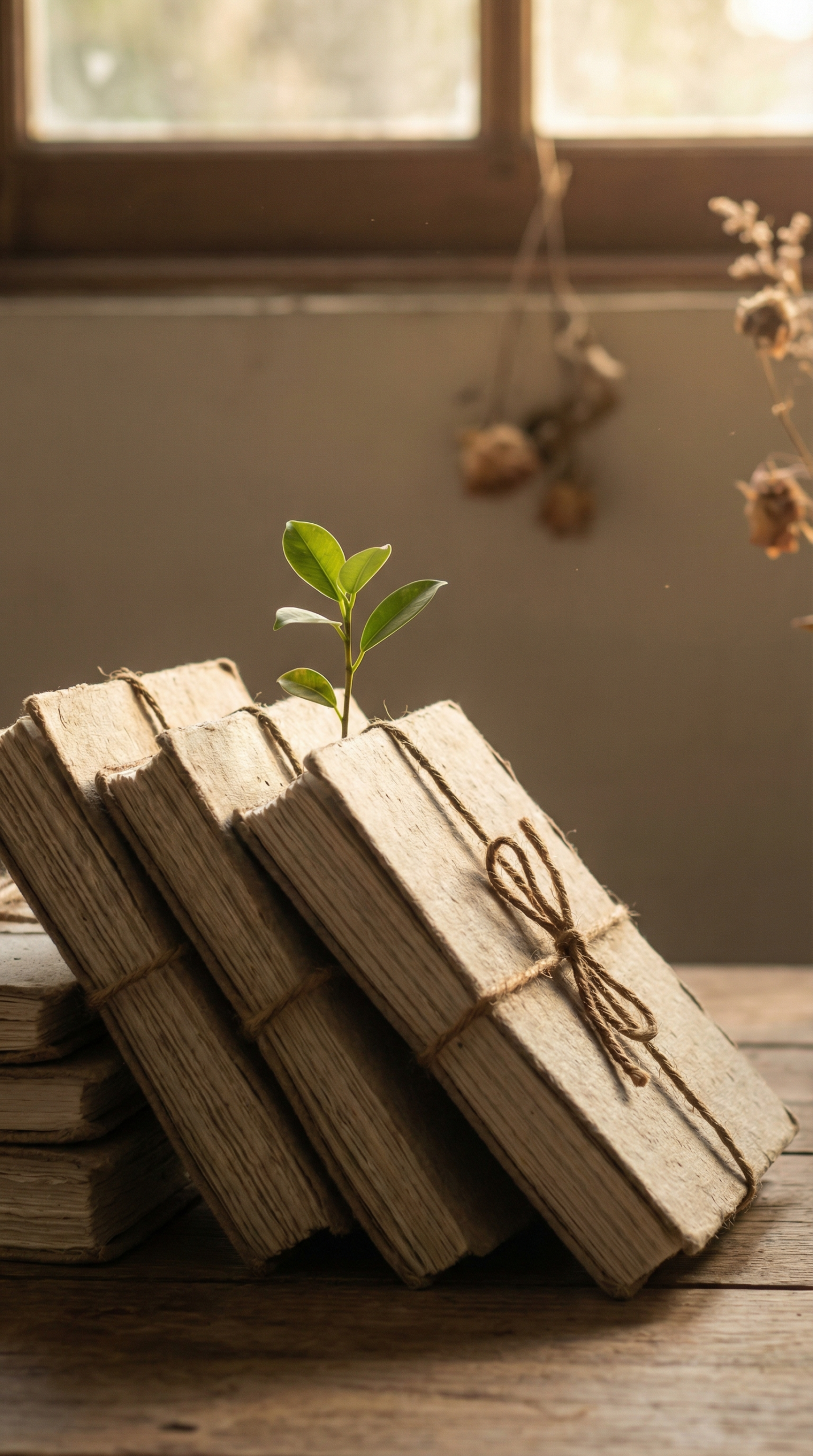
Paper production uses water, energy, and trees. According to environmental research, reducing demand is just as important as recycling.
By reusing paper:
- You extend its lifecycle
- You reduce new resource demand
- You prevent unnecessary waste
Small actions stack up. One journal might seem tiny. But habits compound.
10. Your 10-Day Eco Journaling Challenge
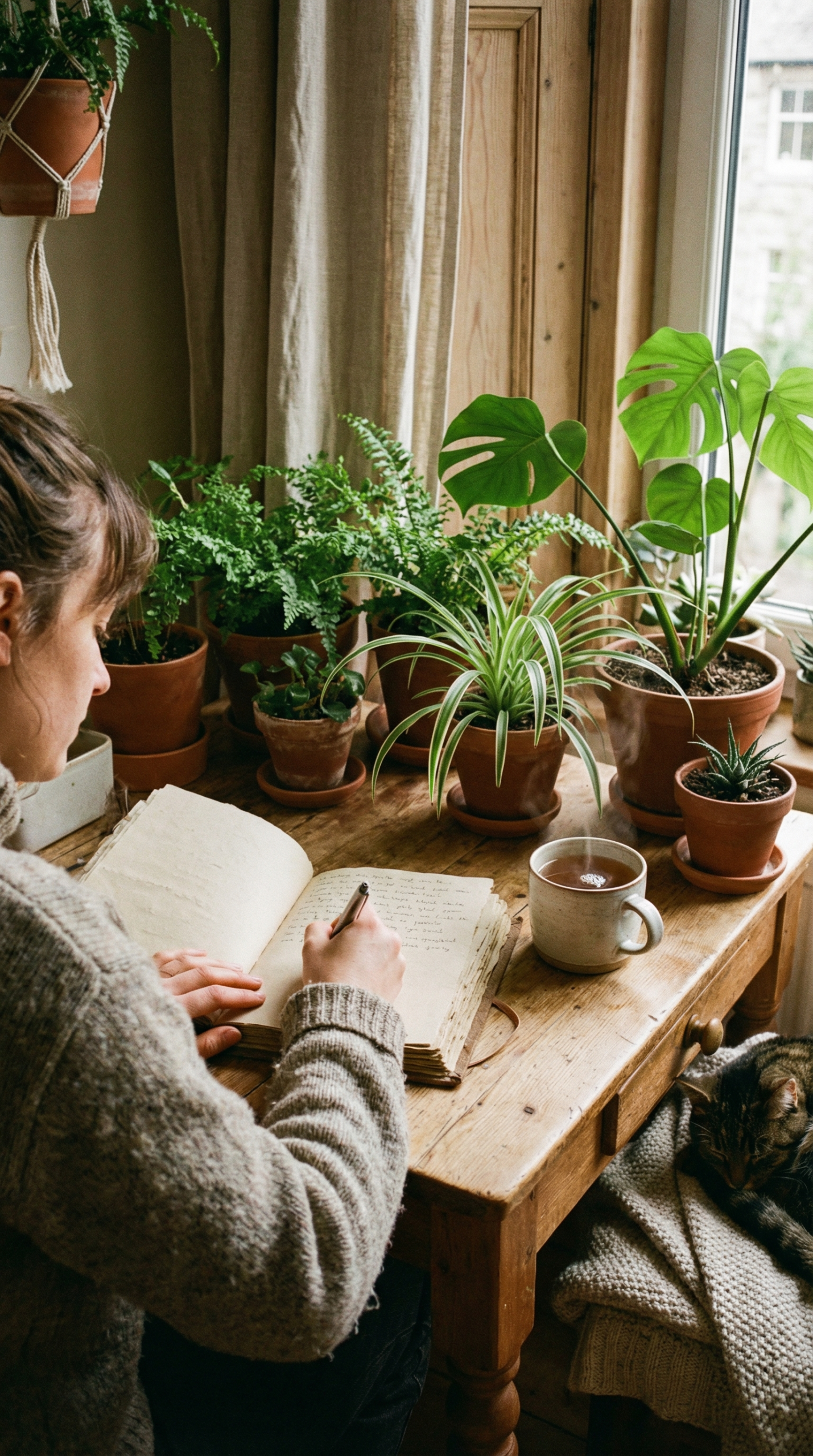
Here’s your gentle challenge:
- Day 1: Gather materials
- Day 2: Make your journal
- Day 3–10: Write daily
Reflect on:
- What you reused
- What you avoided buying
- How it feels to create instead of consuming
Share your experience in the comments. Or better yet, make 10.
Frequently Asked Questions
Is making your own journal really more sustainable?
Yes, especially when using reclaimed materials. You eliminate new production demand and extend the life of existing paper.
What is the most eco-friendly paper for journals?
Recycled paper or paper certified by the Forest Stewardship Council (FSC) is among the most sustainable options.
Can I sell handmade eco-friendly journals?
Yes. Many people value handmade sustainable products. Just ensure materials are ethically sourced and avoid greenwashing claims.
How many pages should a DIY journal have?
There’s no rule. A 10-page journal is perfect for beginners, but you can scale up depending on your needs.
What is the easiest binding method for beginners?
A simple folded booklet with twine or saddle stitch is the easiest and requires minimal tools.
There is something so incredibly grounding about taking “scraps” and turning them into something functional and beautiful. As a millennial who is constantly overwhelmed by digital noise, the idea of sitting down with a literal needle and thread to bind my own thoughts is the ultimate vibe shift.What I love most about this post is how it champions customization through simplicity. We’re so used to buying mass-produced planners with layouts that don’t actually fit our lives, but these DIY methods let us build exactly what we need from the ground up!
Hi Leah,
I love how you described that “vibe shift” is the perfect way to put it!
There really is something grounding about turning scraps into something useful. It feels a bit like rescuing forgotten pieces and giving them a second life. In a world that’s constantly pinging and scrolling, sitting down with paper, thread, and your own thoughts feels almost rebellious in the best way.
You’re so right about customization too. So many planners look beautiful on the outside but don’t quite fit real life. When you make your own, it becomes less about perfection and more about personality.
Thank you for sharing your perspective. It’s lovely to know this resonated with someone else who’s craving a little more hands-on calm in the middle of all the digital noise.
A constructive, helpful comment on this post can highlight what the article does well, why it matters, and how it supports readers who care about sustainability. Here’s an expanded version that stays natural while adding value:
This article offers a thoughtful look at eco‑friendly journaling by showing how meaningful and accessible it can be to create something from materials you already have. The focus on reuse, simplicity, and intention makes the idea feel inviting rather than overwhelming, especially for beginners who want to live more sustainably but aren’t sure where to start.
I like how the author frames handmade journals as both a creative project and a small act of environmental care—turning scraps into something personal and lasting. It’s a great reminder that sustainable choices don’t have to be complicated to make a real impact.
Hi Criz,
Thank you for taking the time to share your thoughts.
I’m really glad the idea came across as inviting rather than overwhelming. Sustainability can sometimes feel like a long checklist, and I wanted this to feel more like sitting at the table with a pile of paper and just starting.
For me, making a journal from scraps isn’t just about saving materials. It’s about slowing down long enough to create something with your own hands. There’s a quiet kind of pride in that. A few pieces of paper that might have been forgotten suddenly becoming a place to hold ideas, plans, or even the messy bits of life.
Small choices, done with intention, really do add up. They don’t need to be grand gestures to matter.
Thanks again for your kind words and for engaging with the post.