
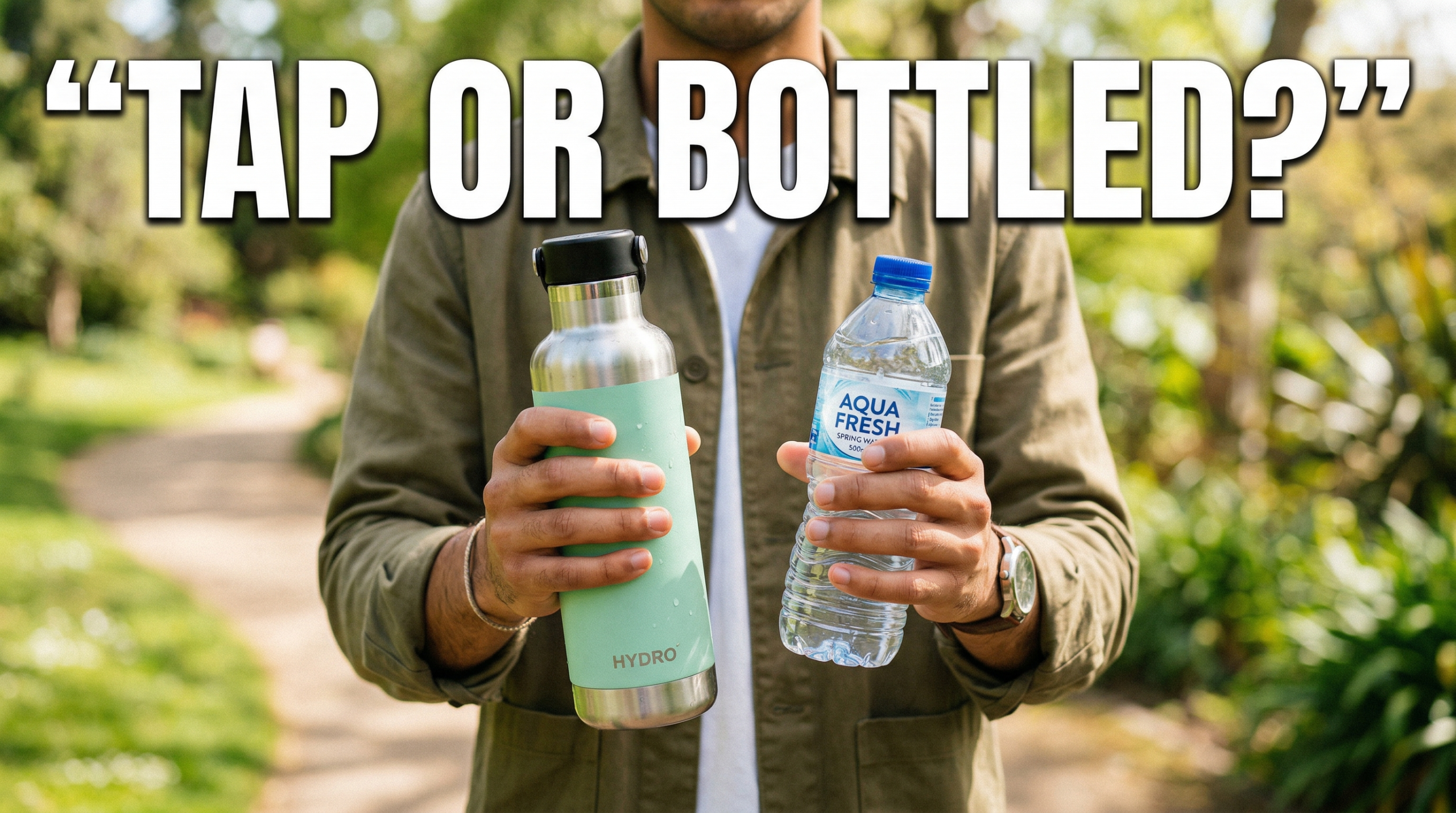
It’s one of those everyday decisions most people don’t think twice about grabbing a bottle of water from the shop or filling up from the tap. But when you zoom out, this simple choice has a surprisingly big impact on your health, your wallet, and the planet.
So which is actually better: tap water or bottled water? Let’s break it down without the marketing noise.
Environmental Impact
| Bottled Water | Tap Water |
|---|---|
| Plastic production requires fossil fuels | No packaging waste |
| Transport adds carbon emissions | No transport emissions |
| Only a fraction gets properly recycled | Uses existing infrastructure |
Bottled water creates a heavy environmental footprint:
Most bottles end up as landfill or pollution.
Tap water wins by a landslide:
Cost Comparison
| Bottled Water | Tap Water |
|---|---|
| Can cost hundreds of times more than tap water | Extremely low cost per litre |
| Daily purchases add up fast | Virtually free at home in most regions |
👉 Over a year, switching can save hundreds of dollars.
Health Considerations
| Bottled Water | Tap Water |
|---|---|
| May sit in warm storage conditions | Regularly tested and regulated in most countries |
| Plastic bottles can leach chemicals over time | Often contains added minerals (depending on region) |
| Not always “purer” than tap water |
The Hidden Truth
Marketing often makes bottled water look cleaner, safer, and more “premium.” But in reality, many bottled waters are simply filtered tap water repackaged.
The Better Choice
For most people, tap water + a reusable bottle is the most sustainable and practical option.
Frequently Asked Questions
Is tap water safe to drink?
Yes, in most developed countries it is heavily regulated and tested regularly.
Is bottled water healthier?
Not necessarily. In many cases it is similar or identical to tap water.
Why is bottled water still so popular?
Convenience and marketing play a huge role in consumer behaviour.
When you strip away the branding and habit, tap water plus a reusable bottle consistently comes out ahead. It’s cheaper, lower impact, and just as safe in most places.
Sometimes sustainability isn’t about doing more – it’s about choosing smarter.